
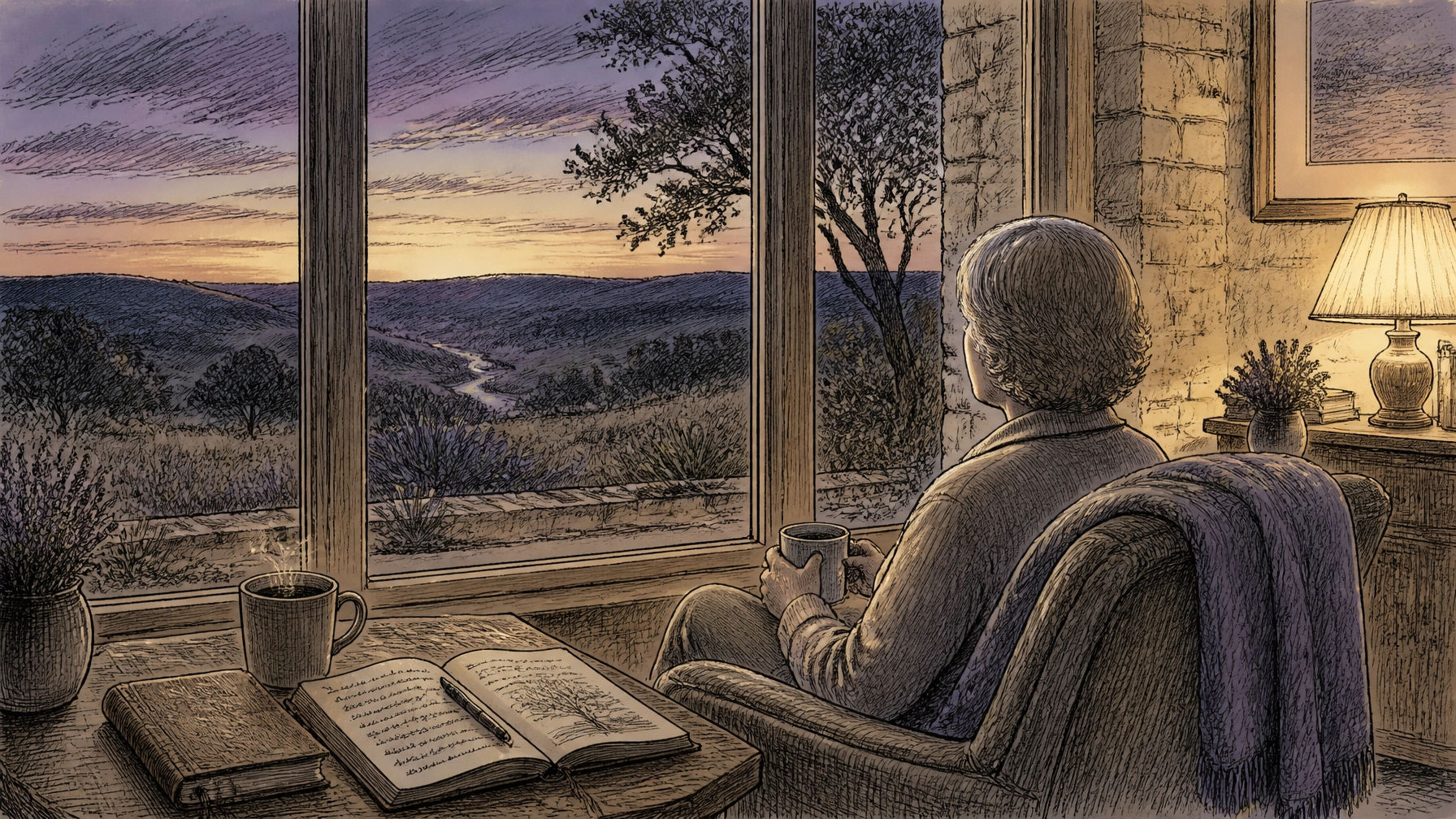
Moving to the Texas Hill Country can feel like stepping into a long-awaited dream. You may picture quiet mornings, limestone hills, wine-country afternoons, and more time for the people and activities you enjoy.
Then winter arrives.
The days are shorter. Outdoor plans become less predictable. The excitement of unpacking has faded, and the people who knew you before the move may now be several hours away. Even in a beautiful place, the first winter can bring an unexpected sense of loneliness.
That does not mean you made the wrong decision. It means relocation is an emotional transition as well as a practical one.
“A new home can be beautiful and still feel unfamiliar.”
For retirees and pre-retirees moving to Boerne, Wimberley, Fredericksburg, Dripping Springs, New Braunfels, or a nearby rural community, recognizing this possibility early can make the adjustment gentler.
Why the First Winter Can Feel Especially Difficult
The first few months after a move often bring energy and distraction. There are boxes to unpack, appointments to schedule, restaurants to try, and neighborhoods to explore. You may be busy creating the physical parts of your new life.
Winter can remove some of that momentum.
A favorite patio may be too cool for a long lunch. A walking trail may be less inviting on a gray afternoon. Neighbors may spend more time indoors, and seasonal events may bring memories of traditions you shared with friends and family back home.
Relocation also interrupts the small social interactions that are easy to overlook. The familiar cashier, longtime neighbor, church member, golf partner, or friend who called without being asked may no longer be part of your weekly rhythm.
The National Institute on Aging explains that loneliness and social isolation are different experiences. Someone can be surrounded by people and still feel lonely, while another person may spend considerable time alone without feeling distressed. The important question is not simply how often you see people, but whether your relationships feel meaningful and supportive.
Do Not Confuse Loneliness with Failure
Many people feel embarrassed when a move does not immediately feel perfect. They may think, “I chose this lifestyle. I should be happier.”
That pressure can make loneliness worse.
A new community takes time to understand. Friendships in adulthood usually develop through repeated, low-pressure contact rather than one dramatic introduction. You may attend a book club once and not speak with anyone long enough to connect. You may go to a community event and leave wondering whether you belong.
That is normal.
Try to view the first winter as a season of observation and participation, not a final judgment on your move. You are learning where people gather, which activities feel comfortable, and what kind of daily rhythm suits you now.
The Hill Country Retirement Guide’s discussion of building community makes an important point: in less densely populated areas, social connection often requires intentional effort. Your nearest neighbor may not become a close friend automatically, but a volunteer project, walking group, arts organization, faith community, or local class can create regular opportunities to meet people.
Build a Winter Routine Before You Need One
A routine does not have to be rigid. It simply gives the day a few dependable anchors.
Consider creating a weekly rhythm that includes:
- A morning walk or time outdoors when daylight is strongest
- One recurring social activity
- A regular phone or video call with someone from home
- A simple household project or creative hobby
- A planned meal outside the house
- Time for rest without allowing the entire day to disappear

The goal is not to fill every hour. It is to create enough structure that you are not making every decision from a place of low energy or discouragement.
The National Institute of Mental Health notes that seasonal affective disorder, or SAD, is a form of depression with a recurring seasonal pattern. Winter-pattern SAD can involve persistent low mood, reduced interest in activities, fatigue, changes in sleep or appetite, and social withdrawal.
Not every bout of winter loneliness is SAD. However, it is worth noticing patterns rather than dismissing them as “just the weather.” If your mood changes significantly during the season, keep notes and discuss what you are experiencing with a qualified healthcare professional.
Use the Hill Country Outdoors—Gently
One advantage of a Texas Hill Country winter is that outdoor time is often still possible. The season may not offer the same long evenings as spring or fall, but cooler days can be ideal for a gentle walk, a park visit, or a quiet morning on the porch.
You do not need to begin training for a strenuous hike. Start with activities that feel manageable:
- Walk around a neighborhood or local park
- Visit a nature area during the warmest part of the day
- Sit outside with a cup of coffee
- Join a low-impact fitness or walking group
- Try gardening tasks suited to the season
- Invite a neighbor to take a short walk rather than asking for a major commitment

Movement can support sleep, energy, and mood, but safety matters. Pay attention to uneven terrain, changing weather, mobility limitations, and any medical guidance you have received. If outdoor activity is not practical on a particular day, consider indoor walking, stretching, chair exercises, or a class at a nearby community center.
The most helpful activity is often the one you can repeat.
Make Connection Specific
“Get out more” is well-intentioned advice, but it is too vague to be useful when you are lonely.
Instead, choose specific actions—
- Call one person every Sunday afternoon
- Attend the same community gathering for four consecutive weeks
- Invite a neighbor for coffee
- Volunteer for a short, defined shift
- Join a class connected to an existing interest
- Ask a local library, senior center, or community organization about winter programs

Repeated contact is powerful. People become familiar with one another gradually. You do not need to make a best friend at the first meeting; you only need to return.
It can also help to maintain your old relationships while building new ones. Schedule visits when possible, but do not rely only on occasional trips. A standing call, shared photo album, handwritten note, or regular video conversation can preserve a sense of continuity during the transition.
If technology is frustrating, ask a family member, library, or community organization for help. Staying connected should not depend on already being comfortable with every device.
Create a Home That Supports Your Mood
Your home should feel like a place where life is happening, not a retreat from life.
Open the curtains in the morning. Place a chair near a bright window. Keep walking shoes by the door. Put a current book, puzzle, sketchbook, or musical instrument somewhere visible. Use warm lighting in the evening and invite people into your space before you feel perfectly settled.
Small environmental choices can encourage action when motivation is low.
You might also create a “winter invitation” routine: soup on Wednesday, coffee on Friday, or a casual porch gathering whenever the weather allows. Hospitality does not have to be elaborate. In the Hill Country, a warm drink and an unhurried conversation can be enough.
Know When to Ask for Help
There is a difference between an adjustment period and distress that is becoming difficult to manage.
Consider speaking with your primary care provider or a licensed mental health professional if low mood, anxiety, hopelessness, exhaustion, or loss of interest persists for two weeks or more. Also seek help if changes in sleep, appetite, concentration, or daily functioning are affecting your ability to care for yourself.
A healthcare professional can help evaluate whether depression, seasonal affective disorder, medication changes, grief, or another health concern may be contributing to what you feel.
For local Texas resources, 2-1-1 Texas can help identify community programs, senior services, transportation options, counseling resources, and other support in your county.
If you or someone you know is experiencing a mental health crisis or thoughts of self-harm, call or text 988 to reach the 988 Suicide & Crisis Lifeline. It is available 24 hours a day, seven days a week. Call 911 for an immediate life-threatening emergency.
Give Yourself Time to Feel at Home
A peaceful Texas Hill Country retirement is not defined by never feeling lonely. It is defined by having the awareness and support to respond when loneliness appears.
Your first winter may be quieter than expected. Let it teach you what you need: more routine, more conversation, more movement, more time with family, or professional support. None of those needs diminish the beauty of the place you chose.
The hills, trails, historic towns, wineries, and open spaces will still be there as you build a life around them. So will the possibility of new friendships.
Relocation is not complete when the boxes are unpacked. It is complete when your days begin to include familiar faces, meaningful commitments, and a feeling that you have somewhere to belong.
Schedule a private meeting with a fiduciary financial advisor today by calling (512) 593-8380 or by visiting: https://calendly.com/portafoliocapital/15min
Portafolio Capital Management dba Mau Sanchez Capital is a Registered Investment Adviser. This content is for informational purposes only and does not constitute investment advice or a solicitation to buy or sell any security. Advisory services are provided only pursuant to a written advisory agreement.
This article may include stories, scenarios, and perspectives created or assisted by artificial intelligence. Although the individuals and circumstances described may be fictional, the topics are intended to reflect real financial, personal, and lifestyle issues that retirees and individuals commonly face. The content is provided to encourage readers to consider different perspectives that may affect their retirement, regardless of whether they are currently planning, approaching retirement, or already retired. It is intended for general educational and informational purposes only and should not be interpreted as personalized investment, financial, tax, legal, medical, or retirement-planning advice. Individual circumstances vary. Readers should independently verify any information presented and consult appropriately qualified professionals before making financial or personal decisions. No advisory, professional, or client relationship is created through the use of this website.
Leave a Reply