
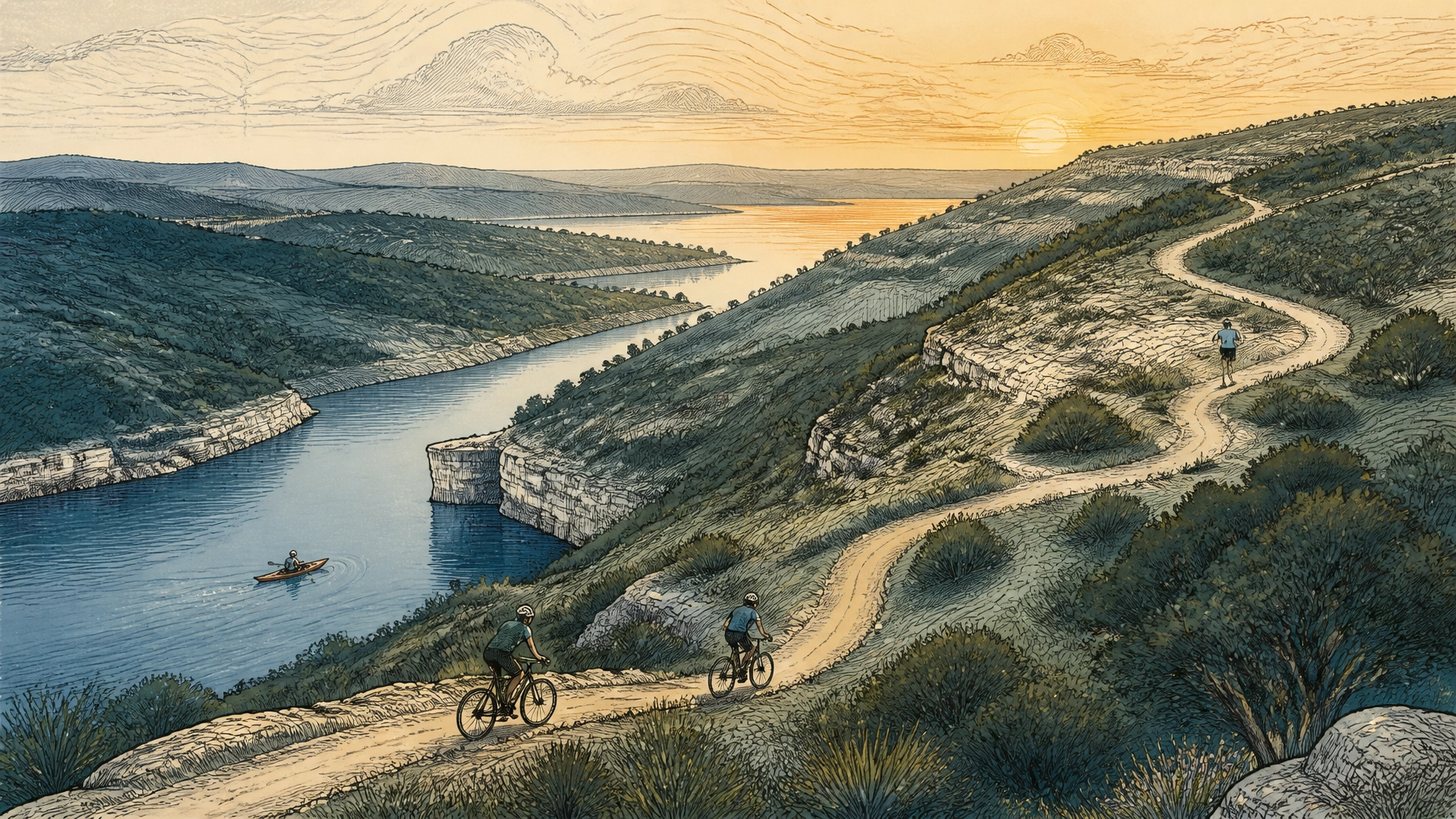
Retirement in the Texas Hill Country can offer more than scenic views and quiet mornings. For many retirees, it creates a daily rhythm built around movement—walking a riverside trail before breakfast, cycling through live oak country, paddling a calm cove, or joining neighbors for an outdoor fitness class.
The region from Kerrville to Canyon Lake is especially appealing for people who want an active lifestyle without giving up the slower pace, natural beauty, and small-town character that make the Hill Country attractive. You do not need to be a serious athlete to enjoy it. The key is having access to activities that match your current fitness level—and enough variety to keep you interested over time.
Why the Hill Country Works for an Active Retirement
The Hill Country’s terrain encourages movement without requiring every outing to be strenuous. Paved river trails provide comfortable walking and cycling routes, while state parks offer more varied terrain for those who want a challenge. Lakes, rivers, and shaded parks add opportunities for low-impact recreation.
This variety can be valuable in retirement. Instead of relying on one demanding workout, you can build an active week around several types of movement:
- Walking on paved or gently graded trails
- Cycling on multi-use paths and quiet roads
- Hiking through limestone hills and wooded areas
- Kayaking or canoeing on suitable waterways
- Gentle strength, balance, or mobility classes
- Social activities such as birding, pickleball, or group walks
As the National Institute on Aging explains, a balanced activity routine can include endurance, strength, balance, and flexibility exercises. The Hill Country lifestyle makes it possible to combine those categories naturally, often outdoors and with friends.

Kerrville: A Strong Base for Walking and Cycling
Kerrville is a practical choice for retirees who want outdoor recreation close to town. The Kerrville River Trail follows the Guadalupe River and provides an approximately six-mile, multi-use route for walking and bicycling. Its wide concrete surface and multiple access points make it easier to plan a short outing rather than committing to the entire trail.
That flexibility matters. One day, you might walk a half-mile along the river and stop for coffee. Another day, you could connect several sections for a longer ride. Trail access points include Louise Hays Park, Riverside Nature Center, Lowry Park, the Dietert Center, and Kerrville-Schreiner Park.
The city lists the River Trail as a daylight-use facility, and dogs must remain leashed. Because trail conditions can change after storms or flooding, check the City of Kerrville’s current park information before heading out.
For a more rugged experience, Kerrville-Schreiner Park offers hiking and biking trails along the Guadalupe River. The park includes shaded picnic areas, river access, and a network of trails with varying levels of difficulty.
This combination—an accessible paved trail system and a larger natural park—can help retirees gradually build an active routine. You can begin with level walking and later add hills, longer distances, or cycling as your comfort and confidence develop.
Guadalupe River State Park: Trails, Water, and Natural Beauty
East of Kerrville, Guadalupe River State Park offers another well-rounded outdoor destination. The park has four miles of river frontage and approximately 13 miles of hike-and-bike trails.
The trail system includes shorter routes, such as the 0.3-mile River Overlook Trail, along with longer options such as the 2.86-mile Painted Bunting Trail. This range makes the park useful for different ability levels and different kinds of outings.
Texas Parks and Wildlife describes the park simply: “With four miles of river frontage, the Guadalupe River takes center stage at the park.” That setting creates a mix of activity and restoration. You can walk beneath live oaks, pause at a river overlook, or spend time watching birds and wildlife.
The park also supports canoeing and kayaking when water levels are appropriate. The Guadalupe River State Park Paddling Trail provides a five-mile route, although paddlers should contact the park for current flow conditions before planning a trip.
For retirees, the park’s variety may be more important than any individual trail. A morning hike, a picnic by the water, or a ranger program can become part of a larger lifestyle centered on being outdoors.
Canyon Lake: A Different Kind of Workout
Canyon Lake offers a change of pace from river trails and wooded hikes. The lake is suited to paddling, swimming, fishing, and other water-based activities, while nearby parks provide opportunities for walking and sightseeing.
WORD of Comal County’s Canyon Park is a lakefront day-use area with access to the Madrone Trail, picnic sites, and nearby water recreation. Comal Park is another popular day-use destination with a sandy beach and space for a full day outdoors.
Kayaking can be especially appealing for retirees who prefer a low-impact activity that still engages the upper body and core. Quiet coves near Potters Creek are often highlighted as calmer areas for paddling, but conditions can vary. Wind, boat traffic, water levels, and temperature all matter.

Canyon Lake also provides shorter walking experiences. Overlook Park includes a roughly 0.6-mile trail across the top of Canyon Dam, with views of both the lake and the Guadalupe River valley. It is a good example of how an active retirement does not require every outing to be a long hike.
Before visiting, check current park hours, fees, and safety information. Many Canyon Lake facilities are seasonal, and there are no lifeguards at the parks. Anyone paddling should use appropriate safety equipment and review local conditions.
Building a Sustainable Weekly Fitness Routine
An active retirement does not have to resemble a training schedule. A more sustainable approach is to create a weekly rhythm that includes movement, recovery, and social connection.
One possible routine might look like this:
- Monday: A comfortable walk on the Kerrville River Trail
- Tuesday: Gentle strength and balance exercises at home or in a class
- Wednesday: A short cycling route or park walk
- Thursday: Rest, stretching, or a social activity
- Friday: Hiking at Kerrville-Schreiner Park or Guadalupe River State Park
- Saturday: Kayaking, swimming, or a lakeside outing at Canyon Lake
- Sunday: A relaxed neighborhood walk or time in the garden
The goal is not to complete the most miles. It is to make movement part of everyday life. A route that is close to home, easy to access, and enjoyable enough to repeat may be more valuable than a spectacular trail that requires elaborate planning.

The Social Side of Hill Country Fitness
Fitness culture in the Hill Country does not need to feel competitive. It can be social, informal, and connected to the community.
A walking group can turn a familiar trail into a weekly gathering. A cycling club can make quiet roads feel more approachable. A kayaking outing can combine exercise with lunch by the lake. Even volunteering at a park or participating in a nature program can encourage more time outdoors.
This social dimension may be one of the most important lifestyle benefits for retirees relocating to the region. Outdoor activities create natural opportunities to meet people without the pressure of formal networking. Shared interests—birds, wildflowers, rivers, trails, or local history—can make it easier to form new friendships.
For those comparing communities, it may be helpful to visit during different seasons and ask practical questions:
- Are trails close enough to use regularly?
- Is there a paved route for easier walking or cycling?
- Are there nearby parks with restrooms and shaded areas?
- Can you access water recreation without a long drive?
- Are group classes, clubs, or community activities available?
- How do summer heat and seasonal closures affect your routine?
These questions connect lifestyle preferences to the realities of daily living. They can be just as important as evaluating restaurants, shopping, or home design.
Planning for an Active Chapter of Retirement
The Texas Hill Country offers a strong setting for retirees who want nature-focused living and regular outdoor activity. Kerrville provides river trails and park access near town. Guadalupe River State Park adds hiking, biking, and paddling. Canyon Lake brings water recreation, scenic overlooks, and a different kind of outdoor rhythm.
As you compare communities, consider not only how beautiful a place is, but how easily you can participate in the lifestyle you want. The best retirement setting may be the one that makes healthy, enjoyable activity convenient enough to become a habit.
A move to the Hill Country is also a significant financial and lifestyle decision. Housing costs, transportation, recreation expenses, and the timing of a relocation can all affect how comfortably your plans fit together. For broader planning considerations, you can explore The Hidden Cost of Hill Country Living We Never Expected and The Hill Country Retirement Dream vs. Reality: An Honest Year-One Report.
The most rewarding version of an active retirement is rarely built around one dramatic adventure. It is usually created through small, repeatable choices—walking after breakfast, meeting a friend on the trail, paddling a quiet cove, or exploring a new park on a mild morning.
Schedule a private meeting with a fiduciary financial advisor today by calling (512) 593-8380 or by visiting: https://calendly.com/portafoliocapital/15min
Portafolio Capital Management dba Mau Sanchez Capital is a Registered Investment Adviser. This content is for informational purposes only and does not constitute investment advice or a solicitation to buy or sell any security. Advisory services are provided only pursuant to a written advisory agreement.
This article may include stories, scenarios, and perspectives created or assisted by artificial intelligence. Although the individuals and circumstances described may be fictional, the topics are intended to reflect real financial, personal, and lifestyle issues that retirees and individuals commonly face. The content is provided to encourage readers to consider different perspectives that may affect their retirement, regardless of whether they are currently planning, approaching retirement, or already retired. It is intended for general educational and informational purposes only and should not be interpreted as personalized investment, financial, tax, legal, medical, or retirement-planning advice. Individual circumstances vary. Readers should independently verify any information presented and consult appropriately qualified professionals before making financial or personal decisions. No advisory, professional, or client relationship is created through the use of this website.
Leave a Reply