
Three years ago, my husband and I stood in the middle of our 3,500-square-foot suburban home outside of Dallas and realized we were living in a museum.
We had a formal dining room that saw action exactly twice a year. We had a guest wing that remained perfectly preserved, like a time capsule, between holiday visits. We had a "media room" where the only thing gathering was dust. Every weekend was a marathon of maintenance: pool cleaning, lawn mowing, and the endless cycle of repairing things in rooms we didn't even use.
We were "house rich" but "time poor."
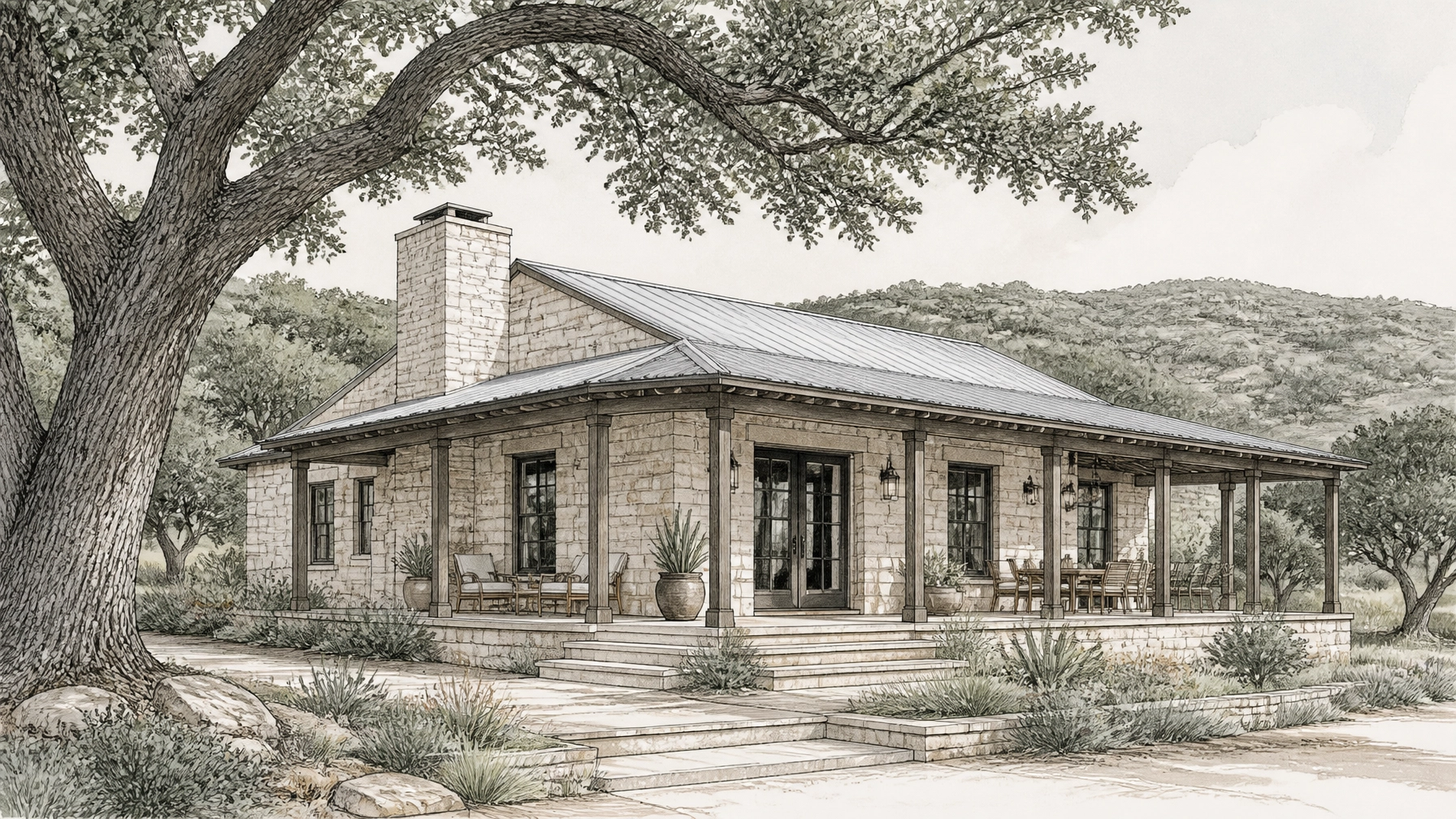
When we made the decision to retire to the Texas Hill Country, we knew things had to change. We didn't just want a new zip code; we wanted a new way of living. We traded our sprawling suburban estate for a 1,800-square-foot stone casita tucked away near Wimberley.
The math said we were losing nearly half our square footage. Our hearts told us we were gaining a whole lot more.
The Mental Shift: From Storing Things to Creating Space
The hardest part of downsizing isn't the physical act of moving boxes; it’s the psychological shedding of "status" that we often tie to the size of our homes. For decades, we were told that bigger was better. A larger home meant success.
But as we approached retirement, that large home started to feel like an anchor.
We began what some call "Swedish Death Cleaning", a practice of decluttering so your heirs don't have to. We looked at our furniture and realized that 60% of it was there simply to fill the voids of a large floor plan. The heavy oak table that seated twelve? It went to a young family in our neighborhood. The boxes of "someday" items in the attic? Donated or recycled.
What we kept were the essentials: the pieces that held genuine stories and the items that served a daily purpose. By the time we moved into our modern Hill Country casita, we felt lighter before we even unpacked the first box.

The Freedom of the "Lock-and-Leave" Lifestyle
One of the primary drivers for our move was the desire for a lock-and-leave lifestyle. In our 3,500-square-foot home, going on a three-week trip to Europe required a military-grade logistics plan. Who would watch the pool? Who would handle the inevitable leak? Who would make sure the landscaping didn't die in the Texas heat?
In our 1,800-square-foot home, the footprint is manageable. The xeriscaped yard requires almost zero attention. Our utilities have plummeted, our electric bill is a third of what it used to be, and the mental load of home ownership has practically vanished.
Last month, we decided on a Tuesday to drive down to the coast for a few days. We turned off the lights, locked the front door, and left. No stress. No long checklist. Just freedom.
Designing for Life, Not for Shows
People often ask us, "Don't you feel cramped?"
The truth is quite the opposite. When you have 3,500 square feet, you tend to have several mediocre rooms. When you have 1,800 square feet, every square inch can be high-quality.
We focused our budget on a stunning, open-concept kitchen and a living area with a floor-to-ceiling stone fireplace. Instead of five bedrooms, we have two: a master suite and a flexible office/guest room. Because the home is smaller, we were able to afford higher-end finishes, reclaimed wood beams, premium windows that frame the rolling hills, and a professional-grade outdoor kitchen.
We stopped designing our home for the "what if" (like the "what if we host 20 people for Thanksgiving?") and started designing it for the "every day." Most days, it’s just the two of us. When the kids and grandkids do visit, we spend our time on the porch or exploring the hidden gems of the Hill Country, not huddled in a formal parlor.

The Financial Impact: Beyond the Sale Price
While the emotional benefits of downsizing have been profound, the financial impact has been equally significant. Moving from a large, high-maintenance property to a smaller, more efficient one is a cornerstone of wealth preservation.
It wasn't just about the cash we pocketed from the sale. It was about the ongoing "burn rate."
- Property Taxes: In Texas, property taxes are a major consideration. A smaller footprint naturally leads to a more manageable tax bill.
- Maintenance: We no longer spend thousands a year on roof repairs for unused wings or intensive pool chemicals.
- Liquidity: The equity we unlocked from our large suburban home didn't just sit in a bank account. We worked with our advisor to ensure that capital was put to work in the markets.
When we sat down with Mau Sanchez, we talked about how this move fit into our overall retirement income planning. Instead of having a massive amount of our net worth tied up in a non-liquid asset (the 3,500-square-foot house), we shifted that wealth into a diversified, publicly traded portfolio.
"Downsizing is often the most effective way to transition from a 'growth' phase of life to a 'preservation and enjoyment' phase. It’s about making your assets work for your lifestyle, rather than your lifestyle working for your assets." , Mau Sanchez
By favoring liquid, transparent markets over the "forced savings" of a giant home, we gained the flexibility to fund our travels and enjoy the local winery culture without checking our bank balance every day.

Lessons from the Other Side
If you are currently sitting in a large home, looking at empty rooms and wondering if you could ever "fit" into something smaller, here is what I wish I’d known three years ago:
- You won't miss the rooms. I cannot remember the last time I thought, I wish I had that extra guest bedroom to clean.
- Outdoor space is the great equalizer. In the Hill Country, your "living room" extends to your porch and your acreage. An 1,800-square-foot house feels like 4,000 square feet when you have a well-designed outdoor space.
- Quality over quantity. Invest in the things you touch every day, your bed, your kitchen counters, your favorite chair.
- The "Gains" are invisible. You gain time. You gain peace of mind. You gain the ability to say "yes" to spontaneous adventures because your house isn't demanding your presence.
Downsizing wasn't a compromise. It was an upgrade. We didn't just move to a smaller house; we moved to a larger life.
Are you ready to plan your move to the Texas Hill Country?
Whether you are looking to downsize to a low-maintenance casita or looking for guidance on how to manage the equity from your home sale, we are here to help you navigate the transition with confidence.
Schedule a private meeting with a fiduciary financial advisor today by calling (512) 593-8380 or by visiting: https://calendly.com/portafoliocapital/15min
Portafolio Capital Management dba Mau Sanchez Capital is a Registered Investment Adviser. This content is for informational purposes only and does not constitute investment advice or a solicitation to buy or sell any security. Advisory services are provided only pursuant to a written advisory agreement.
This article may include stories, scenarios, and perspectives created or assisted by artificial intelligence. Although the individuals and circumstances described may be fictional, the topics are intended to reflect real financial, personal, and lifestyle issues that retirees and individuals commonly face. The content is provided to encourage readers to consider different perspectives that may affect their retirement, regardless of whether they are currently planning, approaching retirement, or already retired. It is intended for general educational and informational purposes only and should not be interpreted as personalized investment, financial, tax, legal, medical, or retirement-planning advice. Individual circumstances vary. Readers should independently verify any information presented and consult appropriately qualified professionals before making financial or personal decisions. No advisory, professional, or client relationship is created through the use of this website.
Leave a Reply