
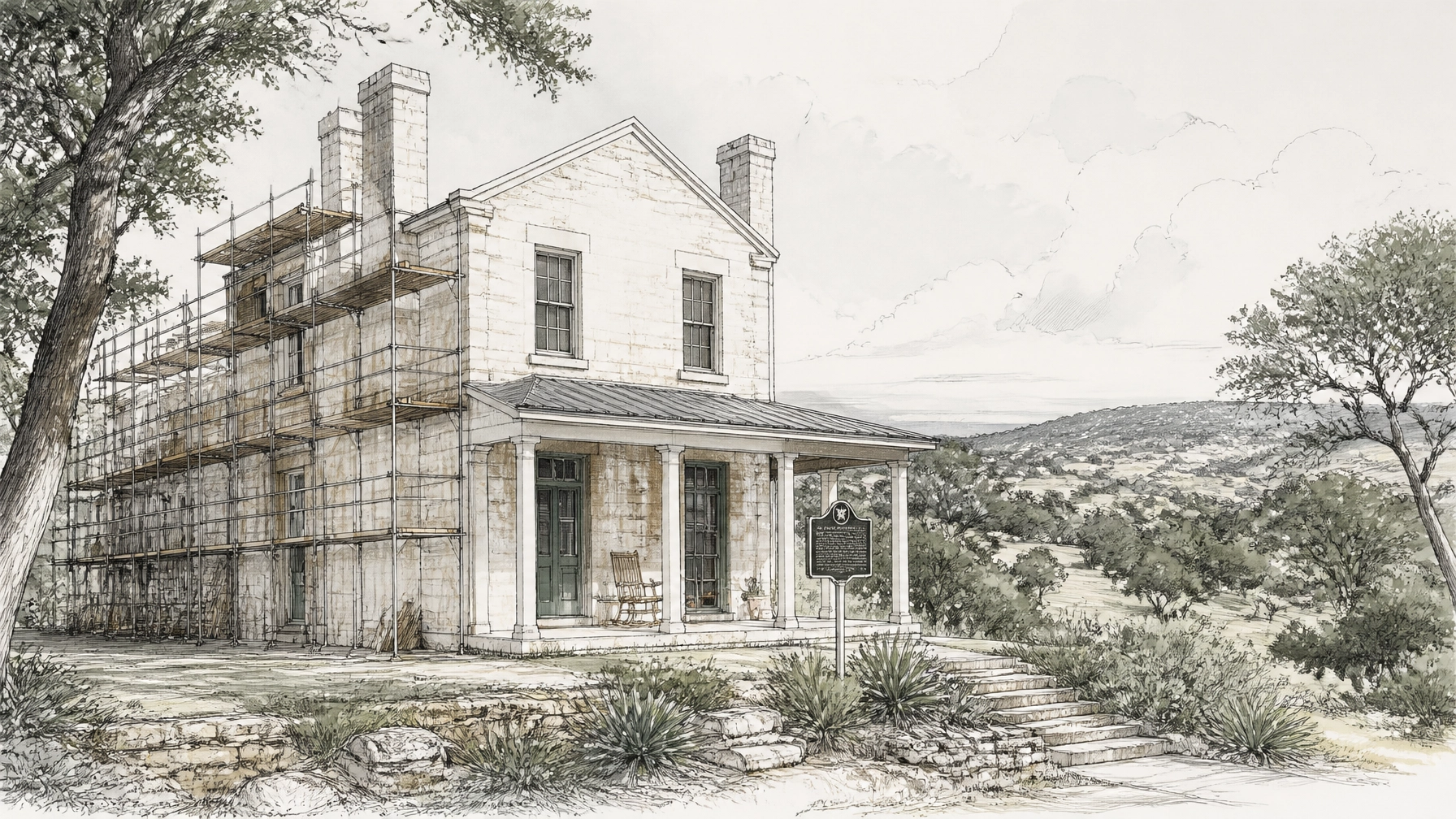
There is a specific kind of romance that comes with a 100-year-old limestone cottage in the Texas Hill Country. You see it while driving through the historic districts of Fredericksburg or Boerne, the thick, hand-hewn stone walls, the deep porches designed for a pre-air-conditioning era, and the undeniable sense of permanence.
When my wife and I decided to ditch the suburban sprawl for a piece of Texas history, we thought we knew what we were getting into. We had watched the shows, we had done the "standard" remodels before, and we had a healthy budget. But as the old saying goes in the Hill Country: "If these walls could talk, they’d probably ask for a much larger contingency fund."
Renovating a historic home in this region isn’t just a construction project; it’s a stewardship. It’s a complex dance between honoring the past and making a home livable for a modern retirement. Looking back on our journey, there are several things we wish we’d known before the first chisel hit the limestone.
The "Certificate of Appropriateness" is Your New Best Friend (or Hurdle)
In many of our favorite local towns, preservation isn't just a suggestion, it’s the law. If your home sits in a designated historic district, you don't just "paint the shutters" or "swap the windows."
Before we could even think about contractors, we had to navigate the local historic review board. We learned quickly that most Hill Country towns follow the Secretary of the Interior’s Standards for the Treatment of Historic Properties. This means that if you want to replace those drafty, single-pane windows with modern vinyl, you’re going to get a very polite, very firm "no."
We wish we had known about the 60-day rule for Recorded Texas Historic Landmarks. If your home has that coveted silver medallion from the Texas Historical Commission, you are required to notify them at least two months before starting work that might affect the home's integrity. Dealing with these boards requires patience and a mindset of preservation over modernization. It took us three months just to get the green light for our porch restoration, a timeline we hadn't factored into our initial "move-in" date.

The Infrastructure "Surprise" (It’s Always the Foundation)
When you buy a home built in 1910, you aren't just buying a floor plan; you’re buying a century of "creative" repairs. In the Hill Country, limestone is our greatest asset, but it can also be a structural enigma.
We found that our historic limestone foundation had "settled" in a way that made a level floor a physical impossibility. Our contractor, a man who had spent thirty years working on Fredericksburg stone, told us, "In an old house, square is a suggestion, not a fact."
We wish we had performed a deeper "invasive" inspection before closing. Beneath the charming beadboard ceilings, we found a labyrinth of galvanized pipes that were one flush away from a catastrophe and wiring that belonged in a museum, not a residential wall. These aren't just "old house problems": they are capital-intensive transitions that can significantly impact your retirement liquidity if you haven't planned for them.
Finding the "Limestone Whisperers"
Perhaps the most important lesson we learned was that your average general contractor is often ill-equipped for a historic restoration. We went through three interviews before finding a team that understood the "repair first, replace second" philosophy required by preservation boards.
You need craftsmen who understand how to point lime mortar: which allows the stone to "breathe": rather than using modern Portland cement, which can actually cause historic limestone to crack over time. These specialized skills come at a premium, and they don't work on a fast-tracked schedule.
Finding these artisans felt a lot like finding the right financial advisor; you’re looking for someone who values long-term integrity over a quick, flashy fix. We realized that our home wasn't just a place to live; it was a significant asset in our overall wealth preservation strategy.

Managing the "Renovation Creep" in Your Retirement Plan
One of the biggest stresses of our renovation wasn't the dust; it was the "renovation creep." What starts as a kitchen refresh quickly turns into a full-scale plumbing overhaul because you "might as well while the walls are open."
From a financial perspective, we had to be disciplined. It’s easy to get caught up in the emotion of "saving" a historic home and lose sight of your long-term retirement income planning.
We treated the renovation like a major portfolio adjustment. Instead of pulling from our core equity holdings during a market dip to cover overages, we worked with our advisor to ensure we had the proper liquidity set aside beforehand. This allowed us to enjoy the process rather than panicking every time a contractor found a new "opportunity" behind a wall.
At Mau Sanchez Capital, the philosophy centers on this kind of foresight: ensuring that your lifestyle dreams, like a historic Hill Country restoration, don't compromise the stability of your publicly traded market investments.

The Ultimate Payoff: Living in a Story
Despite the unexpected delays, the "historic board" meetings, and the dust that seemed to find its way into every coffee cup, we would do it all over again. There is a profound sense of peace that comes from sitting on a porch that has seen a century of Texas sunsets.
We’ve learned that a historic home forces you to slow down. It demands a different pace of life: one that perfectly matches the slower-paced retirement living we were searching for when we moved here.
If you are considering a historic purchase in Boerne, Wimberley, or Fredericksburg, our best advice is to embrace the journey. Don't fight the house; listen to it. And most importantly, make sure your financial house is as solid as your limestone one before you begin.

Ready to Plan Your Hill Country Transition?
Whether you’re buying a historic stone cottage or building a modern ranch, your retirement transition deserves a custom-built financial strategy. At Mau Sanchez Capital, we help families navigate these high-value transitions with a focus on transparency, liquidity, and fiduciary care.
Schedule a call with a fiduciary financial advisor today: https://calendly.com/portafoliocapital/15min
To learn more about our approach to wealth management and portfolio design, visit https://portafoliocapital.com/ or give us a call at (512) 593-8380.
Schedule a private meeting with a fiduciary financial advisor today by calling (512) 593-8380 or by visiting: https://calendly.com/portafoliocapital/15min
Portafolio Capital Management dba Mau Sanchez Capital is a Registered Investment Adviser. This content is for informational purposes only and does not constitute investment advice or a solicitation to buy or sell any security. Advisory services are provided only pursuant to a written advisory agreement.
This article may include stories, scenarios, and perspectives created or assisted by artificial intelligence. Although the individuals and circumstances described may be fictional, the topics are intended to reflect real financial, personal, and lifestyle issues that retirees and individuals commonly face. The content is provided to encourage readers to consider different perspectives that may affect their retirement, regardless of whether they are currently planning, approaching retirement, or already retired. It is intended for general educational and informational purposes only and should not be interpreted as personalized investment, financial, tax, legal, medical, or retirement-planning advice. Individual circumstances vary. Readers should independently verify any information presented and consult appropriately qualified professionals before making financial or personal decisions. No advisory, professional, or client relationship is created through the use of this website.
Leave a Reply