
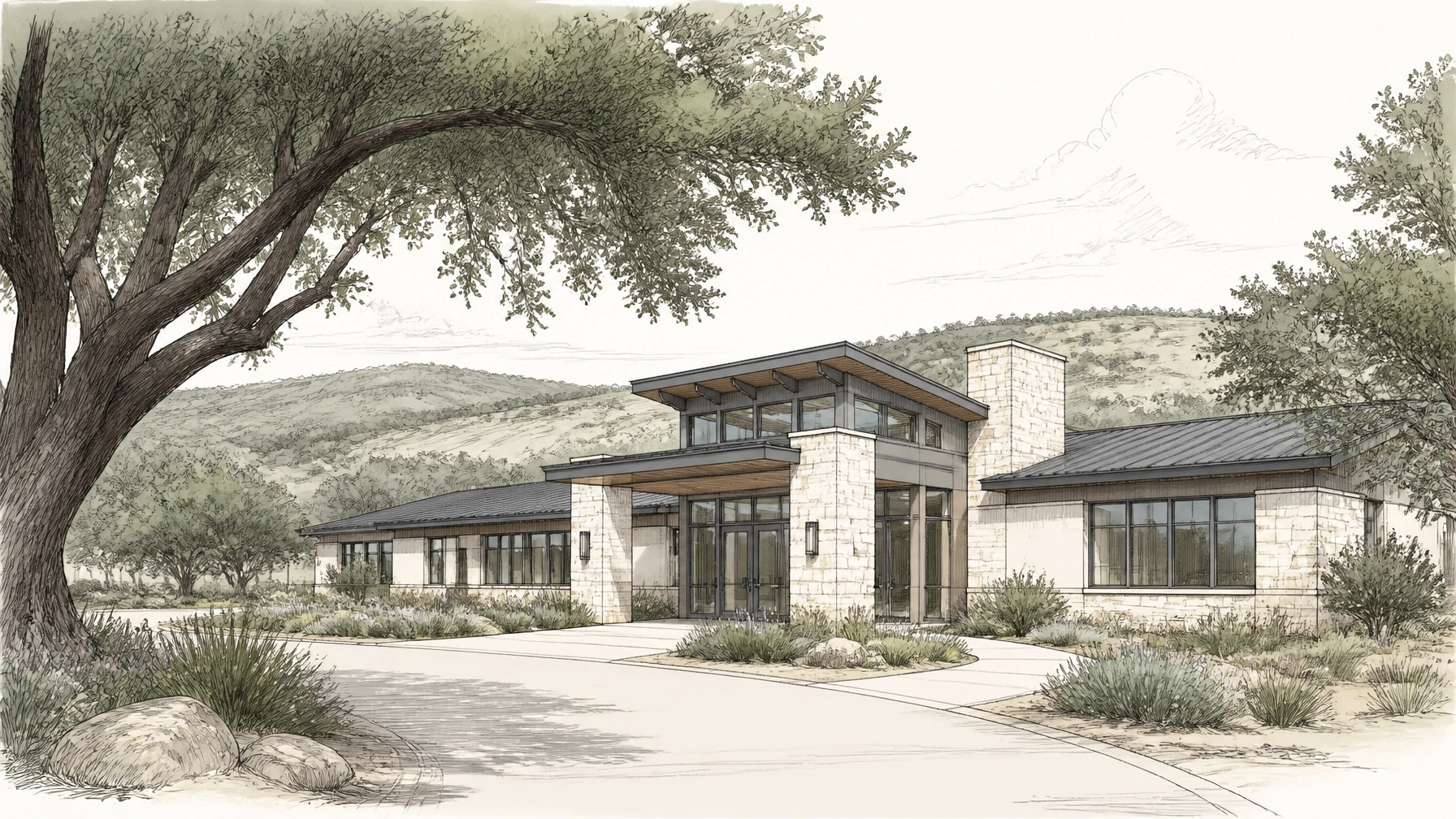
When my wife and I first started scouting the Texas Hill Country for our "forever" spot, we were blinded by the light. Specifically, that golden, late-afternoon light that hits the limestone bluffs in Wimberley and turns the Guadalupe River into a shimmering ribbon of glass. We looked at acreage, we looked at property taxes, and we looked at how far the nearest HEB was.
But we didn’t really look at the doctors.
Like most retirees moving from a major metro area: in our case, the medical sprawl of Houston: we took healthcare for granted. We assumed that if there was a hospital with a recognizable name within 30 miles, we were covered. It wasn't until a minor scare involving a recurring knee issue and a quest for a specific cardiologist that I realized the "Healthcare Gap" in the Hill Country is very real. It isn't necessarily a gap in quality, but it is a gap in proximity and logistics.
If you are planning to trade the city skyline for a sunset over the Balcones Escarpment, there are three things about rural healthcare access that nobody tells you until you’re already here.
1. The "Specialist Shuffle" is a Real Exercise Routine
In the city, if you need a specialist, you have fifteen choices within a ten-minute Uber ride. In the Hill Country, your local town: whether it’s Fredericksburg, Kerrville, or Marble Falls: likely has a fantastic community hospital.
Facilities like Peterson Health in Kerrville or Hill Country Memorial in Fredericksburg are award-winning institutions. They handle the "bread and butter" of healthcare: primary care, general surgery, and emergency stabilization: with a level of personal touch you won't find in a massive urban medical center.
However, once you move into the realm of "sub-specialists": we're talking about advanced neurosurgery, specific oncological protocols, or complex cardiac electrophysiology: you will quickly learn the geography of I-10 and Highway 281.

For many of us, retiring here means accepting that a trip to the doctor might involve a 60-minute scenic drive to San Antonio’s Medical Center or Austin’s specialist hubs. It’s what I call the "Specialist Shuffle." It’s not a dealbreaker, but it is a lifestyle adjustment. You don't just "pop in" for a 15-minute follow-up; you plan a day around it, perhaps grabbing lunch at a favorite spot in Boerne on the way back.
2. The "Golden Hour" and the Reality of EMS
When you’re looking at a 10-acre lot that feels like your own private kingdom, you have to consider the "Golden Hour": the critical window of time in which medical intervention is most effective after a trauma or cardiac event.
In more remote corners of the Hill Country, emergency response times are governed by distance. If you are twenty minutes down a winding ranch road, and the nearest life-flight helicopter or high-level trauma center is in San Antonio, those minutes matter.
This is why towns like Boerne have become so popular for retirees. As I noted in my comparison of Boerne vs. New Braunfels, the proximity to CHRISTUS Santa Rosa in Boerne provides a "safety net" feeling while still offering the rural aesthetic.
"The challenge for many retirees moving to rural Texas isn't the lack of doctors, but the transition from reactive care to proactive logistics. You have to be the CEO of your own health journey here." : Anonymous Hill Country Resident
3. The Rise of Concierge Medicine and Telemedicine
The "gap" in rural healthcare has paved the way for a new model that I’ve seen more of my neighbors adopting: concierge medicine.
In towns like Boerne and Dripping Springs, private practices are popping up that offer 24/7 access to a physician for a monthly fee. For a retiree, this is often the missing piece of the puzzle. It bridges the gap between the local clinic and the big-city specialist. Having a doctor who knows your full history and can coordinate with that specialist in San Antonio: or even handle a "visit" via a high-definition video call: is worth its weight in gold.
Telemedicine has also become a lifeline. High-speed internet is no longer a luxury in the hills; it's a medical necessity. Being able to do a routine check-in from your back porch while looking out at the live oaks is the ultimate version of "wellness."

Planning Your Health Like Your Portfolio
When we talk about retirement planning at Portafolio Capital Management dba Mau Sanchez Capital, we often focus on the numbers: the asset allocation, the risk management, and the long-term equity ownership. But a truly resilient retirement plan accounts for the "lifestyle friction" of aging in place.
Just as you wouldn't put all your eggs in one basket, you shouldn't rely on a single local clinic if your health needs are complex. We often encourage our clients to think about their "health liquidity." How easily can you access the care you need without it draining your time, energy, or peace of mind?
Proper retirement planning isn't just about making sure the money lasts; it's about making sure the life you've built is sustainable. If your dream ranch is an hour away from your cardiologist, we need to factor that travel and potential concierge cost into your long-term cash flow.
The Verdict: Is it Worth It?
Despite the "specialist shuffle" and the longer drives, I wouldn't trade my Hill Country life for a house next door to a hospital in the city. The trade-off is a slower pace of life, cleaner air, and a community where people actually know your name.

The trick is to move here with your eyes open. Build a relationship with a local primary care physician early. Look into the Medigap vs. Medicare Advantage nuances for rural counties: often, a Medigap plan offers more flexibility for those of us who frequently "cross county lines" for care.
Retirement in the Hill Country is about freedom, but that freedom is built on a foundation of smart, proactive planning.
Schedule a private meeting with a fiduciary financial advisor today by calling (512) 593-8380 or by visiting: https://calendly.com/portafoliocapital/15min
Portafolio Capital Management dba Mau Sanchez Capital is a Registered Investment Adviser. This content is for informational purposes only and does not constitute investment advice or a solicitation to buy or sell any security. Advisory services are provided only pursuant to a written advisory agreement.
This article may include stories, scenarios, and perspectives created or assisted by artificial intelligence. Although the individuals and circumstances described may be fictional, the topics are intended to reflect real financial, personal, and lifestyle issues that retirees and individuals commonly face. The content is provided to encourage readers to consider different perspectives that may affect their retirement, regardless of whether they are currently planning, approaching retirement, or already retired. It is intended for general educational and informational purposes only and should not be interpreted as personalized investment, financial, tax, legal, medical, or retirement-planning advice. Individual circumstances vary. Readers should independently verify any information presented and consult appropriately qualified professionals before making financial or personal decisions. No advisory, professional, or client relationship is created through the use of this website.
To learn more about how we help families design sustainable Hill Country retirements, visit Mau Sanchez Capital or give us a call at (512) 593-8380.

Leave a Reply