
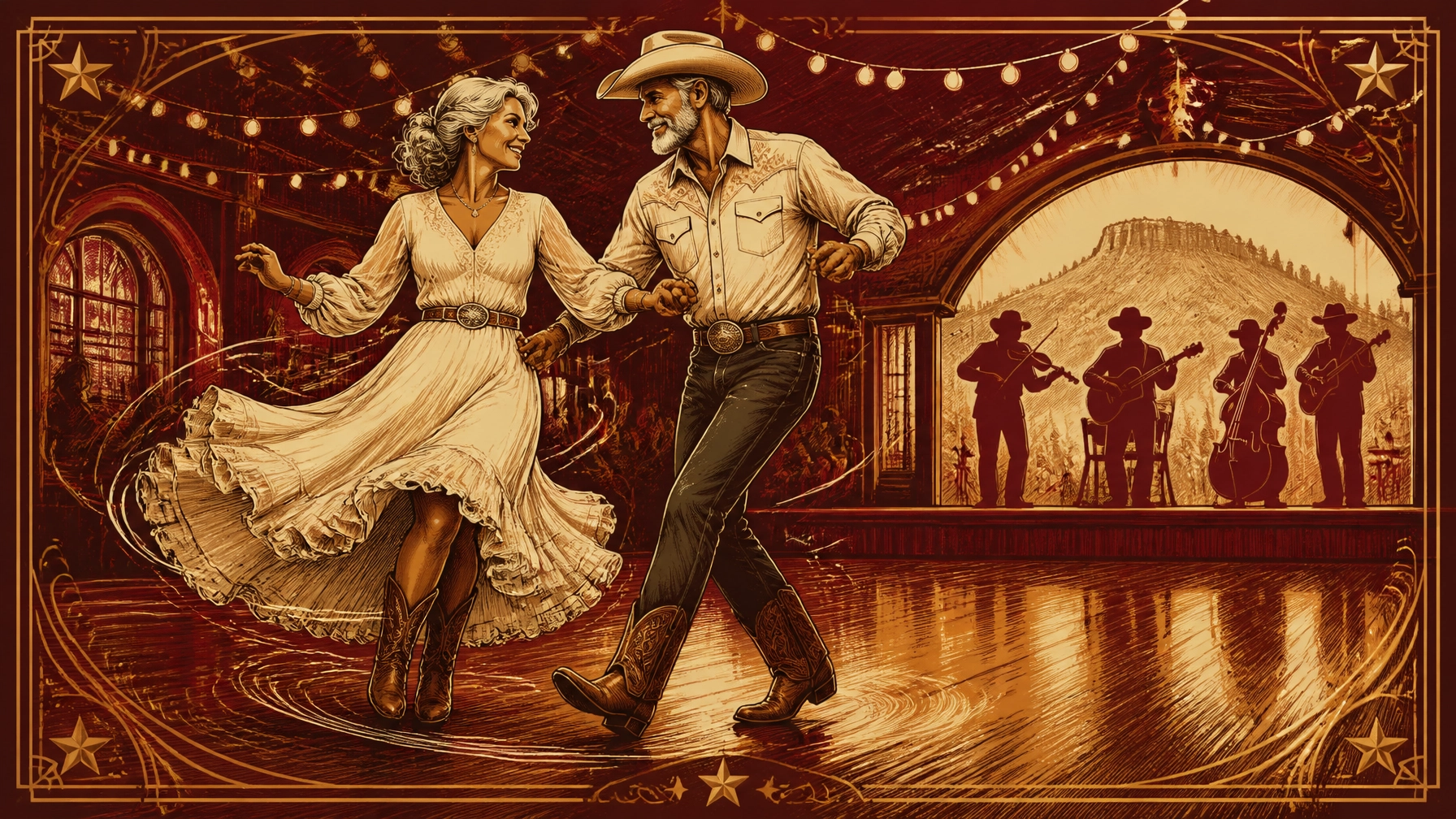
Retirement is often described as a slower pace of life. In the Texas Hill Country, that does not necessarily mean a quieter life.
For many retirees, the region’s rhythm comes from live music, polished wood floors, friendly gatherings, and the steady movement of a Texas two-step. From historic dance halls near Fredericksburg and Blanco to music venues around New Braunfels, Dripping Springs, and Austin, dancing offers more than an evening of entertainment. It can become a natural way to meet people, stay active, and build a meaningful weekly routine.
Whether you already know your way around a dance floor or have never learned a basic step, the Hill Country offers an inviting setting for finding your rhythm in retirement.
Why Dancing Fits So Naturally Into Hill Country Retirement
A fulfilling retirement usually includes more than a comfortable home and beautiful scenery. It also needs regular opportunities for connection, movement, and discovery.
Dancing brings all three together.
A night of two-stepping can be social without feeling forced. You may arrive with a partner, meet friends at the venue, or simply enjoy the music while watching experienced dancers. Unlike some activities that require a high level of athletic ability, social dancing can be adapted to different energy levels. You can take a full turn around the floor, dance in place, or enjoy a slower song from the side.
The atmosphere also tends to be multigenerational. At a traditional dance hall, retirees may share the floor with younger couples, local families, musicians, and visitors experiencing Texas dance culture for the first time. That mix can make it easier to feel connected to the broader community rather than separated into age-based groups.
As Hill Country Two Step explains, Texas partner dances developed from traditions brought to the state by German, Czech, and other European immigrants. That history is part of what makes the region’s dance culture feel distinctive rather than manufactured.
“Tell me and I forget, teach me and I may remember, involve me and I learn.”
The quotation, featured on the Hill Country Two Step website, is a fitting reminder that dancing is learned through participation. You do not need to master every movement before joining in.

Texas Two-Step, Line Dancing, and Ballroom—What Is the Difference?
The phrase “Texas dancing” covers several different experiences.
Texas two-step
The Texas two-step is a partner dance commonly associated with country music and honky-tonk culture. One partner generally leads while the other follows, moving around the floor with a smooth, traveling pattern.
The basic rhythm is approachable, but there is plenty of room to grow. As you become more comfortable, you may learn turns, changes of direction, and variations that match different types of music.
Line dancing
Line dancing does not require a partner. Dancers perform a repeated sequence of steps in rows, often following country, western swing, or popular music.
For retirees who are relocating alone or simply want an easy way to participate, line dancing can be especially welcoming. It offers structure, group energy, and an opportunity to meet people without needing to arrive as part of a couple.
Ballroom dancing
Ballroom dancing is generally more formal in style and may include dances such as the waltz, foxtrot, tango, rumba, and swing. In the Hill Country, you may find ballroom-inspired instruction through studios, community programs, private lessons, and social dance groups.
The benefit of exploring more than one style is variety. You might spend one evening practicing a smooth ballroom pattern, another learning a country line dance, and a weekend at a historic hall listening to a live band.
Historic Dance Halls Create a Different Kind of Night Out
The Hill Country’s dance halls are not simply venues with music and a dance floor. Many are part of the region’s cultural history.
Travel Texas highlights several traditional Texas dance halls where visitors can experience live music and two-stepping. Well-known destinations include Gruene Hall near New Braunfels and Luckenbach near Fredericksburg. These places offer an experience that feels connected to the land and the communities around them.
The setting matters. A historic wooden hall, an open-air pavilion, or a small-town music venue can create a more memorable evening than a conventional entertainment complex. You may hear a local band, recognize a familiar song, and spend part of the night talking with someone who has lived in the area for decades.
Twin Sisters Dance Hall near Blanco is one example of how a venue can serve as both a gathering place and a living piece of Hill Country history. The hall hosts public dances and community events, continuing traditions that have connected local families for generations. Before making plans, check the Twin Sisters calendar, since events and schedules can change.
For someone considering retirement in the area, these venues can become part of a lifestyle comparison. A home near New Braunfels may offer convenient access to Gruene’s music scene. Fredericksburg may appeal to someone who enjoys combining dancing with wineries, restaurants, and an active arts culture. Blanco can provide a smaller-town atmosphere with access to community-centered events.
Lessons Are a Good Way to Begin
Many people hesitate to dance because they assume everyone else already knows what they are doing. In reality, most social dance communities are accustomed to beginners.
A few lessons can make the first evening more enjoyable. You may learn:
- How to maintain a comfortable frame with a partner
- How to move safely around a crowded floor
- How to recognize the rhythm of a two-step
- How to change direction without disrupting other dancers
- How to follow a line-dance sequence
- How to make the experience comfortable for different mobility levels
Hill Country Two Step offers private lessons and other learning options in the Austin area. Private instruction can be useful for couples who want to learn together, while group instruction may be a better fit for someone hoping to meet new people.
The goal does not need to be performance. It may simply be having enough confidence to accept an invitation, join a class, or enjoy a song without worrying about perfection.
Dancing Can Help Shape Your Weekly Retirement Routine
One of the challenges of retirement is having freedom without structure. When every day is open, weeks can begin to feel similar.
A recurring dance night can give the calendar a pleasant anchor:
- Monday—walking group or morning coffee
- Wednesday—line-dancing class
- Friday—dinner and live music
- Saturday—a drive to a historic dance hall or community event
This type of routine is flexible. You can participate often when you feel energetic and scale back during busy or hot periods. In the summer, an evening event may be more comfortable than afternoon recreation. In cooler months, dancing can provide an enjoyable indoor activity when outdoor plans are less appealing.

Dancing may also support a broader approach to retirement wellness. It combines light-to-moderate movement with music, memory, balance, and social connection.
The right activity will depend on your health and mobility, but the larger point is that recreation can be enjoyable and purposeful at the same time.
Let the Music Help You Compare Communities
When comparing Hill Country towns, it can be useful to look beyond home prices, views, and proximity to restaurants. Ask what an ordinary Thursday or Saturday night might feel like.
Consider questions such as:
- Are there regular music and dance events nearby?
- Would you prefer a historic small-town hall or a larger concert venue?
- How far would you travel for lessons?
- Are there community centers offering line dancing or social activities?
- Do you want easy access to Austin, San Antonio, or New Braunfels?
- Would you rather live in a walkable town or drive from a more private property?
These questions help turn a general retirement dream into a lifestyle you can picture living year-round. The best community is not necessarily the one with the most famous venue. It is the one that makes it easy for you to participate in the activities you genuinely enjoy.

Plan for the Lifestyle You Want to Keep
A dance-centered retirement may sound spontaneous, but enjoying it consistently still requires preparation. Transportation, comfortable housing, travel time, health needs, and entertainment expenses all belong in the larger picture of retirement income planning.
A thoughtful investment approach can help support the lifestyle decisions that matter to you. That may include maintaining an appropriate balance of publicly traded stocks and traditional fixed income, keeping sufficient liquidity for changing needs, and using portfolio construction to manage risk rather than relying on unnecessarily complex or illiquid strategies.
The purpose is not to turn every dance outing into a financial calculation. It is to create enough clarity around your resources that you can say yes to the occasional lesson, concert, dinner, or weekend drive without constantly second-guessing the decision.
Retirement has its own rhythm. In the Texas Hill Country, that rhythm may sound like a fiddle, a steel guitar, or boots moving across a wooden floor. You do not need to be an expert dancer to take part. You only need curiosity, comfortable shoes, and a willingness to join the community.
Schedule a private meeting with a fiduciary financial advisor today by calling (512) 593-8380 or by visiting: https://calendly.com/portafoliocapital/15min
Portafolio Capital Management dba Mau Sanchez Capital is a Registered Investment Adviser. This content is for informational purposes only and does not constitute investment advice or a solicitation to buy or sell any security. Advisory services are provided only pursuant to a written advisory agreement.
This article may include stories, scenarios, and perspectives created or assisted by artificial intelligence. Although the individuals and circumstances described may be fictional, the topics are intended to reflect real financial, personal, and lifestyle issues that retirees and individuals commonly face. The content is provided to encourage readers to consider different perspectives that may affect their retirement, regardless of whether they are currently planning, approaching retirement, or already retired. It is intended for general educational and informational purposes only and should not be interpreted as personalized investment, financial, tax, legal, medical, or retirement-planning advice. Individual circumstances vary. Readers should independently verify any information presented and consult appropriately qualified professionals before making financial or personal decisions. No advisory, professional, or client relationship is created through the use of this website.
Leave a Reply