
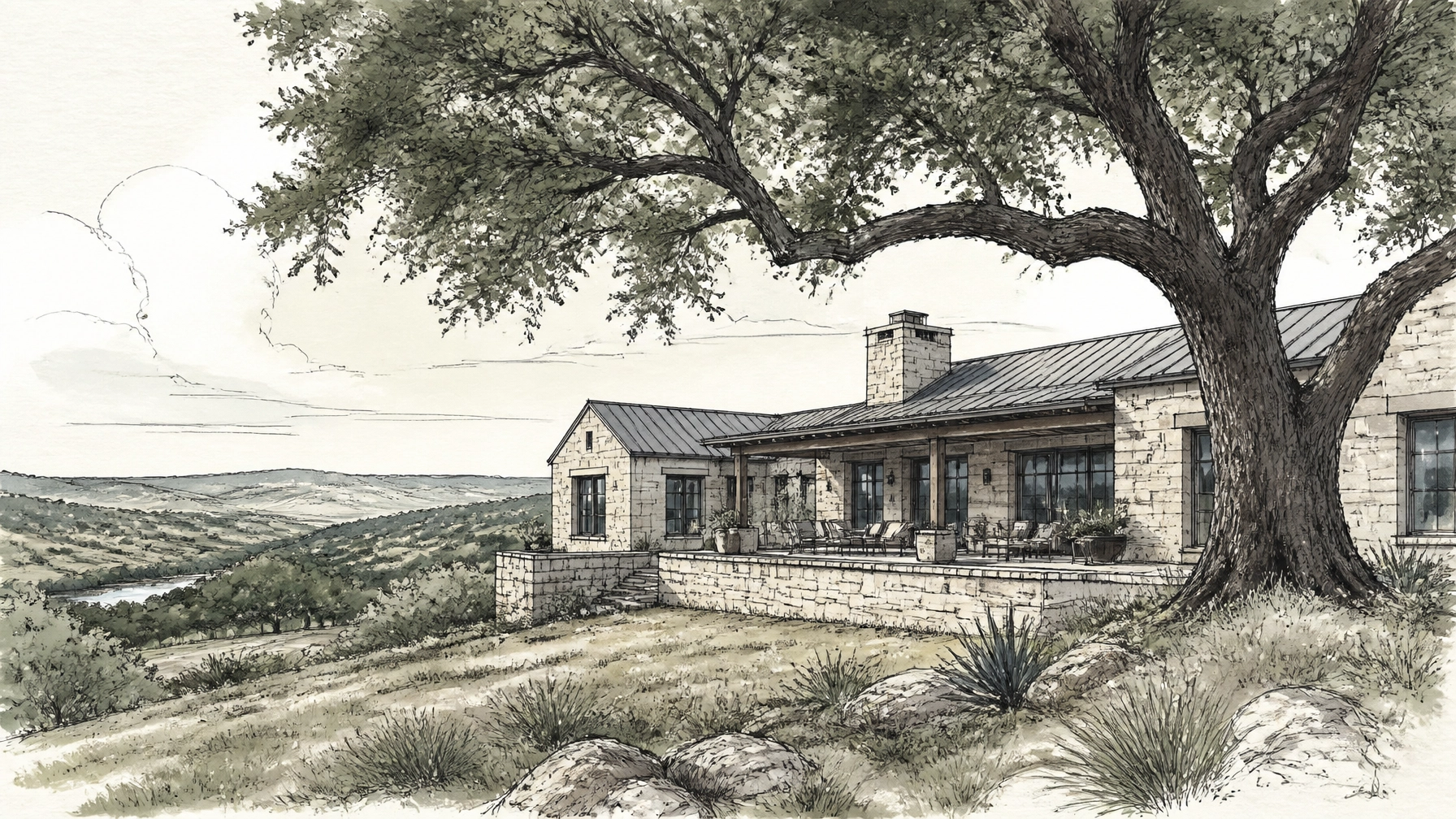
When we first sat on the back porch of our newly purchased home near Boerne, watching the sun dip behind the limestone ridges, we thought we had finally "made it." We had traded the high-stress, high-traffic life of the city for five acres of peace, a stone-clad farmhouse, and the promise of lower monthly expenses.
No state income tax? Check. Lower cost of living than the coast? Check.
But as the first year rolled by, we realized that the "peace" of the Hill Country comes with its own unique price tag, one that doesn't always show up on a standard real estate listing. From the sudden silence of a failed well pump to the surprising bills for "creature comforts" in the middle of a cedar grove, we learned that rural retirement requires a different kind of financial preparation.
If you are considering a move to our neck of the woods, here is a look at the "hidden" costs we never expected, and how we learned to plan for them.
The Silence of the Well: Water and Waste Management
In the city, water is something that just happens. You pay a bill, and the faucet runs. In the Hill Country, if you aren't within city limits, you are your own utility company.
About six months after we moved in, we woke up on a Saturday morning to no water. Not a drop. We quickly learned about the "submersible pump", a piece of equipment buried hundreds of feet underground that had decided to retire before we did.
The Infrastructure Reality
- The Well: Drilling a new well in this rocky terrain can easily cost $40,000, depending on how deep you have to go to hit the Trinity or Edwards Aquifer. Even if your well is established, replacing a pump or a pressure tank can set you back several thousand dollars without warning.
- The Treatment: Hill Country water is notoriously hard. To protect your appliances and your hair, you’ll likely need a sophisticated filtration and softener system. Between the salt, the filters, and the regular maintenance, it’s a recurring expense that city dwellers often overlook.
- The Septic: Most of us out here are on septic systems. An aerobic septic system requires a maintenance contract (usually a few hundred dollars a year) and needs to be pumped every 3 to 5 years. If you don't treat it right, the repair bills are, frankly, quite messy.

The Propane and Power Paradox
We thought our utility bills would drop significantly. In reality, they just shifted. Without access to natural gas, many Hill Country homes rely on propane for heating, cooking, and hot water.
Unlike a monthly gas bill, propane often requires you to buy or lease a massive tank and pay for bulk deliveries. In a particularly cold Central Texas winter, filling that tank can feel like a major capital expenditure. Furthermore, since your water well runs on electricity, every time you take a shower or water your garden, your electric meter is spinning. During the scorching summers, when the AC is working overtime and the well is pumping for the lawn, the bills can rival any suburban home.
As we discussed in our guide on inflation-proofing your Texas dream, managing these variable costs is a key part of long-term retirement success.
The "Hill Country Mile"
Everything is further away than it looks on a map. Our "quick trip" for a gallon of milk is a 25-minute round trip. While the drives are beautiful, they take a toll on more than just your time.
The wear and tear on vehicles is real. Between the gravel ranch roads and the sheer mileage of living "out there," we found ourselves replacing tires and getting oil changes twice as often as before. Fuel costs became a more significant line item in our budget, especially when we considered that most of our favorite restaurants in Wimberley or Fredericksburg were a 30-to-40-minute drive away.

Nature’s "Tax": Wildlife and Landscaping
We love the wildlife. Seeing a family of deer in the backyard is one of the reasons we moved here. However, we quickly realized that the deer see our expensive new landscaping as an all-you-can-eat buffet.
To keep a garden or even basic shrubbery alive, you have to invest in deer-resistant plants (which they still might eat) or significant fencing. Then there are the feral hogs. If a sounder of hogs decides to visit your property at night, they can rototill your entire lawn in a matter of hours. Repairing that damage: and investing in hog-proof fencing: was a "hidden cost" we definitely didn't see coming.
Additionally, the threat of Oak Wilt is a constant concern for anyone with the iconic Live Oaks that define the region. Preventing and treating this fungal disease is an essential, and sometimes costly, part of property maintenance.

The Insurance and Tax Equation
Texas is famous for having no state income tax, but the state has to fund its infrastructure somehow. Property taxes in the Hill Country can be a shock, especially as home values in areas like Boerne and Dripping Springs have skyrocketed. We’ve seen firsthand how a luxury acreage audit reveals that while you get more land for your money, your annual tax bill can remain quite high.
Then there is insurance. The Hill Country is prone to spectacular, but damaging, weather. Hailstorms can shred a roof in minutes, and the rural setting often means higher premiums due to the distance from fire hydrants or the increased risk of wildfires. It is vital to work with an advisor who understands these "lumpy" expenses and ensures your cash flow is prepared for them.
Planning for the "Lumpy" Expenses
One of the biggest lessons we learned is that Hill Country costs are "lumpy." You might go six months with very low expenses, and then suddenly hit a $5,000 bill for a new well pump and a $2,000 propane fill-up in the same week.
This is where professional financial guidance becomes invaluable. When we began working with the team at Mau Sanchez Capital, we shifted our perspective. Instead of just looking at average monthly costs, we started planning for the volatility of rural living.
The philosophy at Mau Sanchez Capital favors:
- Publicly Traded Markets: Keeping the core of your retirement portfolio in liquid, transparent assets like stocks and traditional fixed income. This ensures that when the "hidden costs" of Hill Country living arise, you have the liquidity to handle them without being locked into complex or high-fee alternative investments.
- Risk Management: Constructing a portfolio that accounts for your specific lifestyle needs, including the higher insurance and maintenance costs of a rural property.
- Fiduciary Advice: Having a partner who looks at your entire financial picture: not just your investments: to ensure your Texas dream stays a dream, not a financial burden.
"Retiring in the Hill Country is about more than just finding the right view; it’s about building a financial foundation that can withstand the unique challenges of the landscape." : Mau Sanchez
Conclusion: Is It Worth It?
Despite the failed pumps, the hungry deer, and the long drives, we wouldn't trade our Hill Country life for anything. The peace, the community, and the beauty are worth every penny. However, the key to enjoying it is going in with your eyes open.
By understanding these hidden costs and coordinating your investment strategy with a professional who understands the local landscape, you can ensure that your retirement is spent enjoying the sunset, not stressing over the septic tank.
If you are planning your move or already living here and want to ensure your wealth preservation strategy matches your lifestyle, we invite you to take the next step.
Schedule a call with a fiduciary financial advisor today: https://calendly.com/portafoliocapital/15min
To learn more about how we help families navigate these transitions, visit Portafolio Capital Management dba Mau Sanchez Capital or give us a call at (512) 593-8380.

Schedule a private meeting with a fiduciary financial advisor today by calling (512) 593-8380 or by visiting: https://calendly.com/portafoliocapital/15min
Portafolio Capital Management dba Mau Sanchez Capital is a Registered Investment Adviser. This content is for informational purposes only and does not constitute investment advice or a solicitation to buy or sell any security. Advisory services are provided only pursuant to a written advisory agreement.
This article may include stories, scenarios, and perspectives created or assisted by artificial intelligence. Although the individuals and circumstances described may be fictional, the topics are intended to reflect real financial, personal, and lifestyle issues that retirees and individuals commonly face. The content is provided to encourage readers to consider different perspectives that may affect their retirement, regardless of whether they are currently planning, approaching retirement, or already retired. It is intended for general educational and informational purposes only and should not be interpreted as personalized investment, financial, tax, legal, medical, or retirement-planning advice. Individual circumstances vary. Readers should independently verify any information presented and consult appropriately qualified professionals before making financial or personal decisions. No advisory, professional, or client relationship is created through the use of this website.
Leave a Reply