
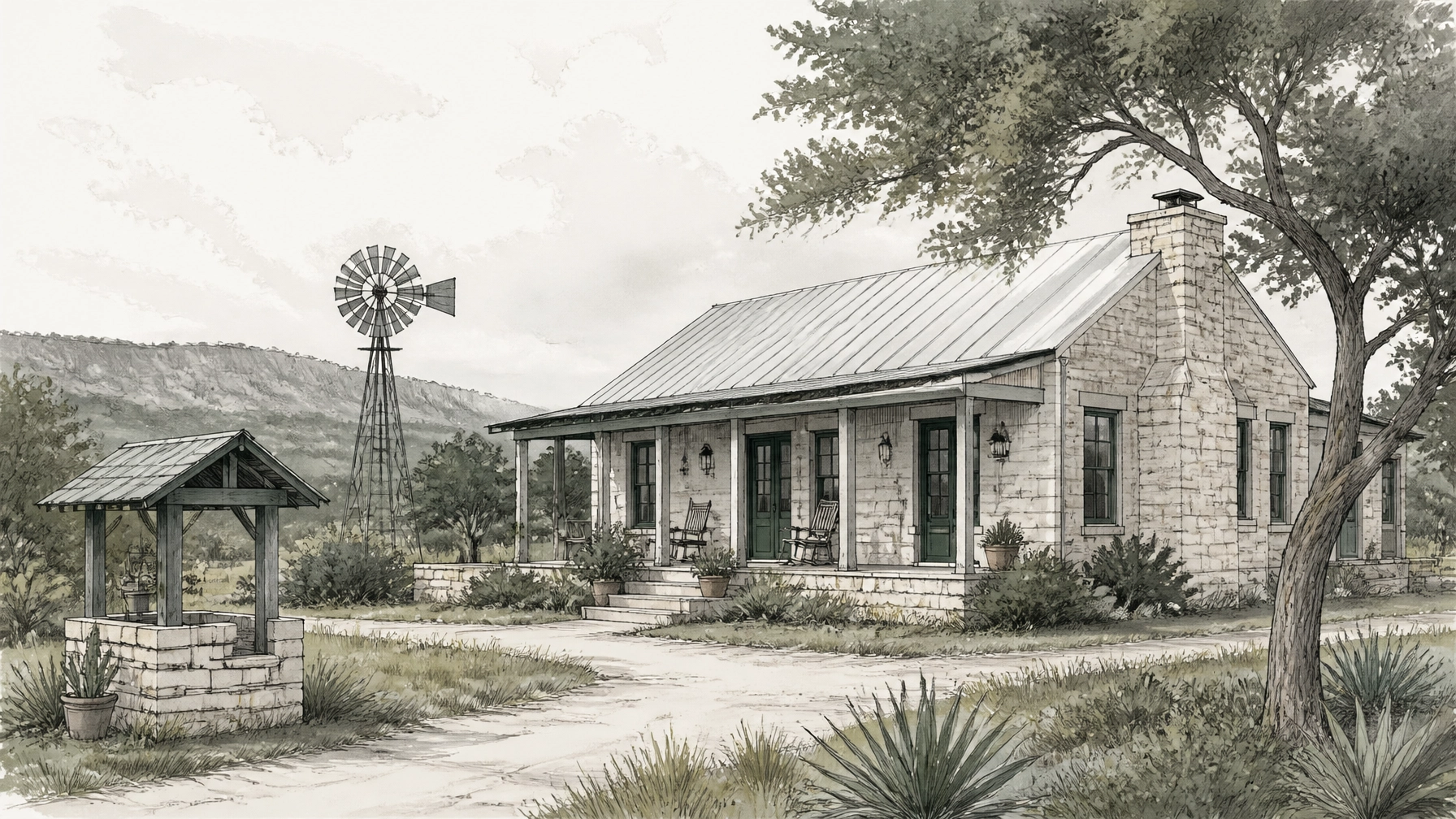
It was 6:00 AM on a Tuesday in July. The sun was just starting to crest over the cedar-covered ridges of our property near Wimberley. I turned on the kitchen faucet to fill the kettle for coffee, expecting that familiar, steady stream of Hill Country water.
Instead, I got a sputter. A hiss of air. And then, silence.
If you’ve lived in a city your entire life, "no water" usually means a water main broke three blocks away and the city will have it fixed by noon. But when you move to a luxury acreage in Boerne or a quiet ranchette in Dripping Springs, "no water" is a very personal problem. It means you, and only you, are the utility company.
That morning was my "welcome to the country" moment. It was the day I realized that while the views are priceless, the infrastructure beneath my feet required a completely different level of stewardship: and financial planning: than I ever imagined.
The Mystery of the Karst Aquifer
When we first looked at modern farmhouses in the Hill Country, the realtor pointed to a small, unassuming concrete pad with a PVC pipe sticking out. "That’s your well," she said. "It taps into the Trinity Aquifer. Great water."
I nodded like I knew what that meant. I didn’t.
Most of the Texas Hill Country sits atop karst limestone. This isn't a solid block of rock; it's a Swiss-cheese-like structure of cracks, caves, and solution channels. According to the Texas Well Owner Network, these aquifers allow water to move quickly: which is great for recharge, but also means contaminants can travel just as fast.

When my well ran "dry," it wasn't actually because the aquifer had disappeared (though drought is a real concern here). It was because my submersible pump, sitting 400 feet below the surface, had finally reached its expiration date.
What You Need to Know About Your Well:
- The Pump Life: Submersible pumps typically last 8 to 15 years. If yours is over a decade old, you aren't just living on borrowed time; you’re living on borrowed water.
- The Pressure Tank: This is the "brain" of your system. If it fails, your pump "short-cycles," turning on and off every few seconds. This will burn out a $4,000 pump in months.
- Water Quality: Hill Country water is notoriously hard. Without a high-quality softener and sediment filter, those minerals will wreak havoc on your high-end appliances and plumbing.
The Other Side of the Equation: The Septic Reality
In the city, you flush and forget. In the Hill Country, what goes down must be managed on-site. Because much of our soil is "caliche": a hard, clay-like rock: traditional septic drainfields don't always work like they do in East Texas.
Many newer homes in our area use aerobic septic systems. These are essentially miniature wastewater treatment plants in your backyard. They use oxygen to break down waste and then spray the treated (and disinfected) effluent onto your lawn via purple-headed sprinklers.

The first time those sprinklers went off while we were hosting a sunset dinner on the patio, I realized we hadn't quite mastered the "septic schedule."
Maintaining a septic system isn't just about avoiding a mess; it's about protecting your well. The Texas Commission on Environmental Quality (TCEQ) recommends a minimum of 100 feet between your septic drainfield and your wellhead. If your septic system fails, it doesn't just stay in the yard: it can migrate into the very water you're drinking.
Septic Best Practices:
- Pump Every 2–3 Years: Don't wait for a backup. Regular pumping removes solids that can clog your system.
- Protect the Drainfield: Never drive a vehicle over your septic tank or lines. The weight can crush the pipes in the rocky soil.
- Mind the Sprinklers: If you have an aerobic system, you are required by many counties to maintain a service contract. This ensures the chlorinator is working and the pump is functional.
The "Retirement Line Item" Nobody Talks About
When families transition from a high-rise to ranch-life, they often budget for property taxes and HOA fees. But they frequently overlook the "Infrastructure Reserve."
Replacing a well pump and pressure tank can easily run $5,000 to $7,000. A new aerobic septic system? That can climb north of $15,000 depending on the terrain. In a peaceful Texas Hill Country retirement, these shouldn't be "emergencies" that derail your lifestyle: they should be anticipated expenses.
This is where proper wealth preservation strategies come into play. At Mau Sanchez Capital, the focus is often on ensuring that your retirement portfolio is built with the liquidity and transparency needed to handle life’s "sputtering faucets."
"A well-constructed retirement plan isn't just about the numbers on a screen; it's about the security of the lifestyle those numbers support. Unexpected home repairs shouldn't dictate your quality of life." : Mau Sanchez

When we look at investment management, we emphasize staying in liquid, publicly traded markets. Why? Because when your well goes out in the middle of a July heatwave, you don't want your "emergency fund" locked up in a private equity deal or an illiquid real estate syndication. You need access to your capital, and you need it now.
A Stewardship Checklist for the Hill Country Homeowner
To avoid the 6:00 AM "no water" surprise, I’ve adopted a stewardship mindset. Here is the schedule I now live by:
Quarterly
- Check the Softener: Hill Country limestone will eat your dishwasher if you run out of salt.
- Inspect the Wellhead: Make sure no brush or debris is piling up around the casing. Ensure the cap is tight to prevent insects or rodents from entering.
Annually
- Water Testing: Once a year, test for coliform bacteria and nitrates. This is especially vital if you have neighbors with livestock or older septic systems.
- Septic Inspection: Check your chlorine levels (for aerobic systems) and ensure the aerator is humming properly.
Every 5 Years
- Professional Well Audit: Have a pro check the "draw down" and the amp load on your pump. They can often tell you if a pump is starting to fail before it actually dies.
Final Thoughts: Living with the Land
Living in the Hill Country is a gift. There is something deeply satisfying about knowing exactly where your water comes from and taking responsibility for the land you occupy. It forces a slower pace, a more intentional way of living.
But that peace is only possible when you’ve planned for the realities of rural infrastructure. By maintaining a liquid, well-allocated portfolio, you can turn a "dry well" from a financial crisis into a simple weekend repair.

The Hill Country isn't just a place to live; it’s a lifestyle to be managed. Whether you are comparing Boerne to New Braunfels or finally building your dream ranch, make sure your financial plan is as deep as your well.
Schedule a private meeting with a fiduciary financial advisor today by calling (512) 593-8380 or by visiting: https://calendly.com/portafoliocapital/15min
Portafolio Capital Management dba Mau Sanchez Capital is a Registered Investment Adviser. This content is for informational purposes only and does not constitute investment advice or a solicitation to buy or sell any security. Advisory services are provided only pursuant to a written advisory agreement.
This article may include stories, scenarios, and perspectives created or assisted by artificial intelligence. Although the individuals and circumstances described may be fictional, the topics are intended to reflect real financial, personal, and lifestyle issues that retirees and individuals commonly face. The content is provided to encourage readers to consider different perspectives that may affect their retirement, regardless of whether they are currently planning, approaching retirement, or already retired. It is intended for general educational and informational purposes only and should not be interpreted as personalized investment, financial, tax, legal, medical, or retirement-planning advice. Individual circumstances vary. Readers should independently verify any information presented and consult appropriately qualified professionals before making financial or personal decisions. No advisory, professional, or client relationship is created through the use of this website.
Leave a Reply