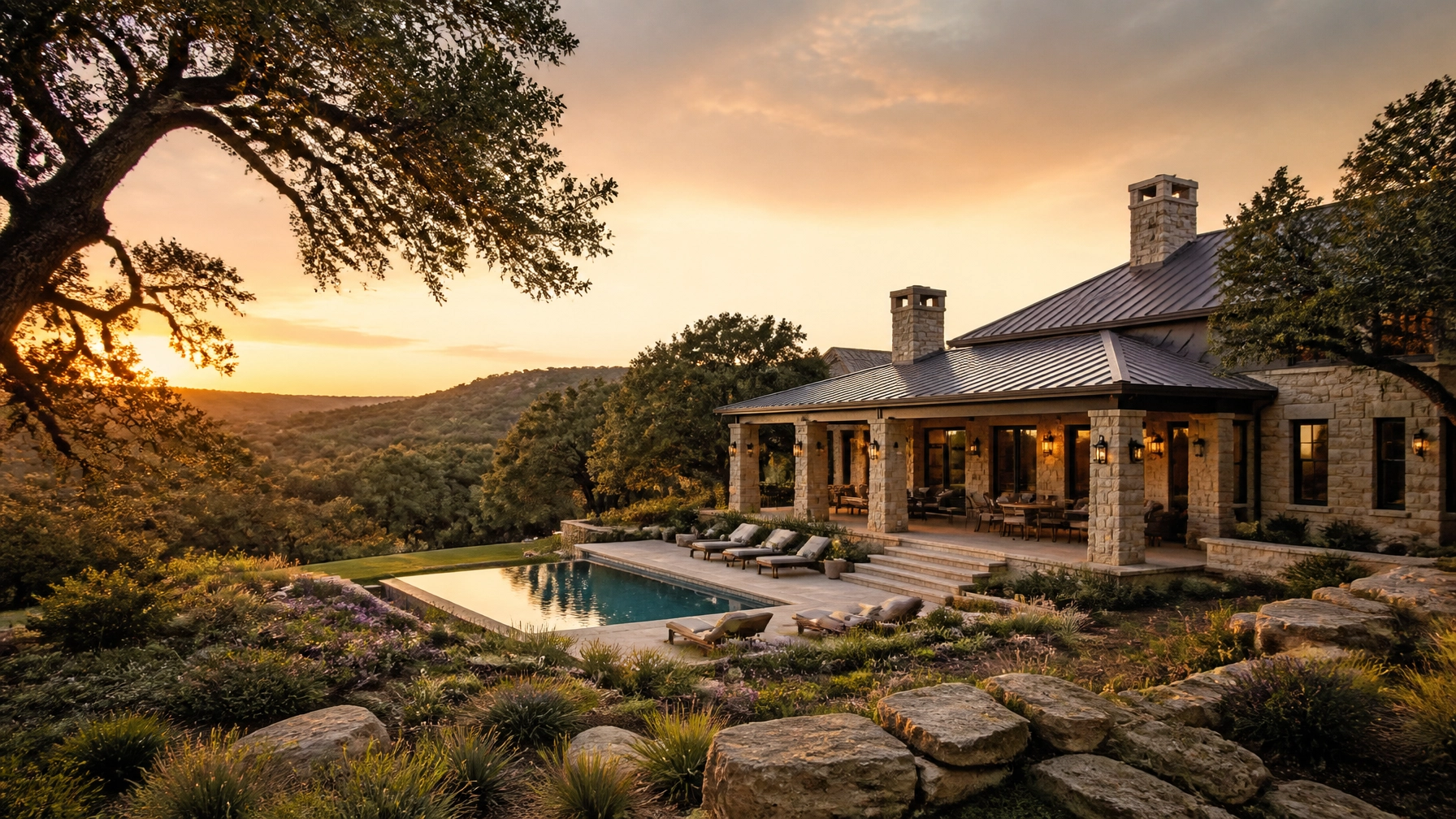
So, you’ve finally made the leap. Maybe you’re coming from the high-rises of Houston, the tech hubs of Austin, or perhaps you’re one of the many fleeing the state income taxes of California or New York. Either way, you’ve landed in the Texas Hill Country: a land of rolling limestone hills, world-class wineries, and a pace of life that actually lets you breathe.
But as you settle into your new custom-built homestead in Boerne or a charming ranch-style retreat in Wimberley, there’s one topic that tends to dominate the conversation at the local country club: property taxes.
Texas is famous for having no state income tax, which is a massive win for your retirement distributions and Social Security. However, the state makes up for that revenue through property taxes. For a newcomer, the numbers can look a bit startling at first glance. But here’s the good news: if you are over 65 or planning your retirement here in 2026, the state has recently implemented some of the most significant tax relief measures in Texas history.
In this guide, we’re going to navigate the 2026 property tax landscape so you can stop worrying about the bill and get back to enjoying that sunset view.
The "Texas Trade-Off"
Before we dive into the specific exemptions, it’s important to understand the broader financial picture. When we work with clients on their strategic wealth protection, we look at the "total tax bite."
While property taxes in counties like Kendall, Comal, and Hays might be higher than what you’re used to, you have to balance that against the 0% state income tax. For high-net-worth retirees with significant RMDs (Required Minimum Distributions) or pension income, the savings on the income tax side often far outweigh the property tax costs.
In the Hill Country, your property tax isn't just one number; it’s a collection of levies from your county, city, school district, and occasionally "special districts" like emergency services or water conservation.

The 2026 Landscape: The $200,000 Benefit
The biggest shift for retirees in 2026 is the expansion of the "Over-65 Exemption." In Texas, a "homestead" is your primary residence. As a Hill Country newcomer, you want to make sure you file for your homestead exemption the moment you qualify.
For the 2026 tax year, the relief for seniors is more robust than ever:
- General Homestead Exemption: The state now allows you to knock $140,000 off your home’s taxable value for school district taxes.
- The Over-65 Exemption: On top of that, if you are 65 or older, you get an additional $60,000 exemption.
The Bottom Line: A qualifying senior in 2026 can shield the first $200,000 of their home's value from school district taxes.
If you’re looking at a $1.2 million home in Cordillera Ranch, you’re only being taxed by the school district on $1 million of that value. Considering that school taxes usually make up the largest portion of your tax bill (often 50% or more), this is a massive win for your retirement cash flow.
The "School Tax Freeze": Your Greatest Ally
While the $200,000 exemption is great, the real "secret sauce" for retirees in the Hill Country is the School Tax Ceiling, often called the "freeze."
Once you turn 65 and claim your exemption, the dollar amount you pay to your school district is frozen. Even if the value of your home doubles over the next decade as the Hill Country continues to boom, your school tax bill will not go up.
There is one caveat: if you make "substantial improvements" to the home: like adding a swimming pool, a large guest house, or a major kitchen expansion: the tax office can adjust the ceiling to reflect that new value. But for those simply enjoying their home as-is, the freeze provides incredible long-term predictability for your retirement income planning.

How to Apply (Don't Miss the Deadline!)
The tax office doesn't automatically know you’ve turned 65 or moved in. You have to be proactive.
- The Form: You’ll need to file Form 50-114 (Application for Residence Homestead Exemption) with your specific County Appraisal District (CAD).
- The Window: You can file as soon as you turn 65. You don't have to wait until the following year.
- The Deadline: To ensure the exemptions show up on your current year's bill, try to file between January 1 and April 30.
Each county has its own appraisal district. If you’re in Boerne, you’ll deal with the Kendall Appraisal District. If you’re in Fredericksburg, it’s the Gillespie Central Appraisal District.
Hill Country Community Comparisons
Not all Hill Country towns are created equal when it comes to the tax rate. While the state-wide exemptions for school districts are mandatory, individual cities and counties have the option to offer additional local exemptions.
- Boerne (Kendall County): Known for its luxury developments and top-tier schools. Kendall County often has competitive rates, but property values have seen significant appreciation.
- Wimberley & Dripping Springs (Hays County): These areas have seen explosive growth. Because Hays County is one of the fastest-growing counties in the nation, staying on top of your exemptions here is vital.
- Fredericksburg (Gillespie County): This area offers a unique mix of historic charm and vibrant winery culture. Gillespie County tends to have a slightly more "rural" tax feel, though the city of Fredericksburg has its own levies.
When comparing communities, always look at the total effective tax rate, which usually hovers between 1.4% and 2.2% before exemptions are applied.
Integrating Property Taxes into Your Wealth Plan
At Hill Country Retirement Guide, we often see newcomers focus so much on the "sticker price" of the home that they forget to model the long-term tax impact.
Property taxes are a "fixed" cost in retirement, but with the 2026 exemptions and the school tax freeze, they are a manageable fixed cost. When we sit down for a financial planning discussion, we look at how these taxes fit into your overall wealth preservation strategy.
For instance, if we know your school taxes are frozen, we can more accurately project your future cash flow needs, allowing you to potentially be more aggressive with other parts of your portfolio: or perhaps finally join that vineyard club you’ve been eyeing in Fredericksburg.

Conclusion
Navigating property taxes in the Hill Country doesn't have to be a headache. By understanding the 2026 exemptions and making sure you file your paperwork on time, you can significantly reduce your tax burden and protect your retirement nest egg.
The Hill Country is about more than just numbers on a spreadsheet; it’s about the lifestyle. It’s about the mornings on the porch with a cup of coffee, the afternoons on the golf course, and the evenings at a local bistro. Understanding your taxes is simply the groundwork that lets you enjoy the rest.
If you’re planning a move to the Hill Country or have recently arrived and want to ensure your financial plan is optimized for the local landscape, we’re here to help.
Schedule a call with a fiduciary financial advisor today: https://calendly.com/portafoliocapital/15min
Portafolio Capital Management dba Mau Sanchez Capital is a Registered Investment Adviser. This content is for informational purposes only and does not constitute investment advice or a solicitation to buy or sell any security. Advisory services are provided only pursuant to a written advisory agreement.
To learn more about how we help families transition to a peaceful and prosperous retirement in the Hill Country, visit us at https://portafoliocapital.com/ or give us a call at (512) 593-8380.
Leave a Reply