
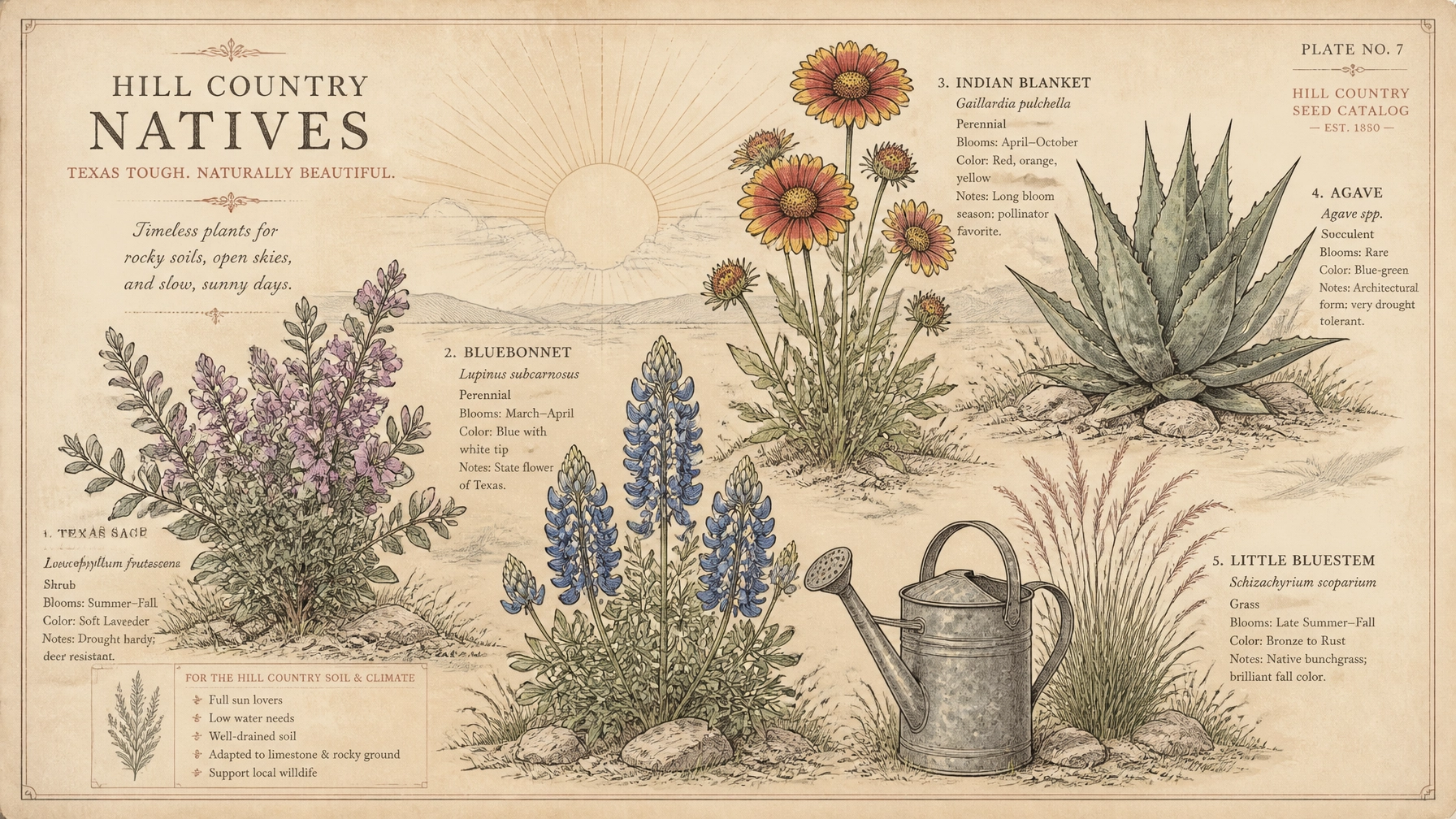
A Texas Hill Country yard can be beautiful without becoming a second job.
For retirees and pre-retirees moving to Boerne, Wimberley, Fredericksburg, Dripping Springs, or New Braunfels, landscaping is more than a curb-appeal decision. It affects how much time you spend outdoors, how often you need to call for maintenance, and whether your property feels like a peaceful extension of the landscape or a constant battle against heat, drought, rocky soil, and wildlife.
The most successful approach is usually not to recreate the lawn and flower beds you left behind. Instead, design around the conditions that already define the Hill Country—limestone outcroppings, thin alkaline soil, intense sun, periods of drought, sudden heavy rain, and native wildlife.
As GardenStyle San Antonio explains, “A Texas Hill Country Landscape design blends a formal landscape into the untouched natural area of a property.”
That idea is especially appealing in retirement. A thoughtful native-plant landscape can reduce routine yardwork while preserving the character, beauty, and sense of place that attracted you to Central Texas.
Start with the Landscape You Already Have
Before removing trees, grading the property, or installing a large expanse of turf, spend time observing your yard.
Notice where water naturally collects after a storm. Identify areas with full sun, afternoon shade, exposed limestone, and deeper soil. Watch where deer enter the property and where birds already gather. Existing live oaks, junipers, rock shelves, and native grasses can become the foundation of your design.
Leaving some areas natural can also make the property easier to care for. Rather than maintaining every corner, consider creating three simple zones—
- A tended area near the house for paths, seating, herbs, and colorful perennials
- A transition zone with shrubs and ornamental grasses
- A natural outer area with existing trees, rocks, wildflowers, and native grasses
This approach reduces the amount of irrigated and frequently trimmed space while creating a more natural visual flow.

Native Grasses Bring Structure Without a Traditional Lawn
Large lawns can be demanding in the Texas Hill Country. They require regular mowing, irrigation, edging, and seasonal attention, and they may struggle in shallow limestone soil.
Native grasses can offer a softer, more regional alternative. They move in the breeze, provide texture through changing seasons, and can create a relaxed meadow-like appearance without requiring every inch of ground to be perfectly green.
Consider these options for the right location:
- Little bluestem creates upright clumps with attractive seasonal color and works well in naturalized areas.
- Sideoats grama is a useful native grass for meadows, borders, and low-water landscape areas.
- Indian grass adds height and movement to the back of a planting bed or larger open space.
- Curly mesquite can work as a low-growing grass alternative in appropriate conditions.
- Gulf muhly produces soft pink plumes in the fall and adds a particularly elegant accent near paths or patios.
- Lindheimer muhly offers tall, airy structure and is well suited to the Hill Country aesthetic.
Grasses are often most attractive when planted in repeated clumps or broad drifts rather than scattered one by one. Repetition makes the landscape look intentional and simplifies maintenance because you are caring for groups of plants with similar needs.

Add Perennials for Color, Pollinators, and Seasonal Interest
A low-maintenance landscape does not have to be plain. Native and well-adapted perennials can provide months of flowers while attracting hummingbirds, butterflies, bees, and other beneficial insects.
Some dependable choices for Hill Country gardens include:
- Autumn sage for long-lasting color and hummingbird appeal
- Mealy blue sage for blue or purple flower spikes in sunny beds
- Four-nerve daisy for a compact, cheerful plant that suits rocky sites
- Blackfoot daisy for low mounds of white flowers and a soft, informal edge
- Turk’s cap for shadier areas and bright red flowers
- Flame acanthus for summer and fall color in a very drought-tolerant form
- Red yucca for evergreen structure and tall coral flower spikes
- Winecups as a spreading groundcover that can fill spaces between larger plants
Wildflowers can also be part of the design. Bluebonnets, Indian blanket, pink evening primrose, winecups, and Maximilian sunflower can create seasonal displays that feel unmistakably Texan. Designate one area for reseeding wildflowers instead of trying to control every bloom. Mow or cut the area only after the plants have had time to set seed.
For a more personalized plant list, the Native Plant Society of Texas Native Plant Database allows you to filter choices by the Edwards Plateau ecoregion, light, soil, water needs, and wildlife benefits.
Use Shrubs and Small Trees as the “Bones” of the Yard
Perennials provide color, but shrubs and small trees give the landscape its lasting structure. They can frame a view, create shade, provide privacy, and reduce the number of individual plants that need seasonal attention.
Options to explore include:
- Texas mountain laurel for evergreen foliage and fragrant purple spring blooms
- Agarita for early yellow flowers, red berries, and very low water needs
- American beautyberry for purple fall berries and a useful wildlife habitat
- Evergreen sumac for durable structure and seasonal fruit
- Possumhaw holly for winter berries
- Texas persimmon for sculptural form and native character
- Texas redbud for spring color
- Live oak for long-term shade and the unmistakable look of the Hill Country
Always match a plant to the available space. A small tree planted too close to a walkway, roof, septic system, or utility line can create future maintenance problems. The goal is not simply to choose drought-tolerant plants, but to place the right plant in the right location.
Design for Wildlife Without Sacrificing Enjoyment
Native plants can make your property more inviting to wildlife, but the Hill Country is already home to deer, turkeys, armadillos, rabbits, and other visitors. A wildlife-friendly landscape should include realistic boundaries.
As we discussed in “The Deer Are Beautiful Until They Eat Your Garden”, deer-resistant does not mean deer-proof. Hungry deer may browse plants they normally ignore, particularly during prolonged dry periods.
A few practical strategies can help:
- Place the plants most vulnerable to browsing close to the home or behind an appropriate fence.
- Use aromatic or textured plants such as rosemary, lavender, sages, and some salvias near walkways.
- Avoid creating dense brush immediately next to the house.
- Provide several seasons of flowers and berries rather than relying on one large bloom period.
- Leave selected natural areas intact for birds and beneficial insects.
- Use low stone walls or fencing to define garden spaces without blocking the view.

Understand the Watering Reality
Native plants are not maintenance-free, and “drought-tolerant” does not mean “never needs water.”
New plants need consistent attention while their root systems become established. Water deeply and infrequently during the establishment period, adjusting for rainfall, soil depth, exposure, and the season. Once established, many Hill Country natives can survive on rainfall and occasional supplemental watering, although extended drought or extreme heat may still require intervention.
A few principles make watering more manageable:
- Group plants with similar water needs together.
- Place plants requiring more attention near a hose or outdoor faucet.
- Use drip irrigation or a soaker hose where practical.
- Water at the base of flowering plants rather than from above.
- Check local watering restrictions before establishing a routine.
- Use mulch around trees, shrubs, and perennial beds to help moderate soil moisture.
A handheld hose may be perfectly adequate for a smaller retirement property. You do not necessarily need a complicated irrigation system across every part of the yard.
The Hill Country Texas Master Gardeners’ plant resources are another useful reference for comparing native and adapted plants that have performed well in the region.
Create a Yard That Supports Your Retirement Lifestyle
The best retirement landscape is not necessarily the one with the most plants. It is the one you can comfortably enjoy and reasonably maintain.
Include a stable, gently graded path from the house to a bench, patio, garden gate, or view. Keep frequently visited areas close to the home. Use raised beds or containers if bending and kneeling are becoming less comfortable. Choose plants with different bloom periods so the landscape remains interesting without requiring constant replanting.
You may also want to plan for travel. If you enjoy extended trips or a seasonal “lock-and-leave” lifestyle, a native landscape can be easier for a neighbor or maintenance professional to monitor than a thirsty lawn and delicate ornamental beds.
As our guide to the first Hill Country summer explains, the region’s heat shapes everyday life. It also shapes the way a property should be designed.

A Simple Maintenance Rhythm
A native landscape still benefits from a seasonal routine, but the work can be more predictable—
- Late winter: Prune selected shrubs and cut back dormant ornamental grasses before new growth begins.
- Spring: Watch for weeds, refresh mulch, and enjoy wildflowers as they emerge.
- Summer: Water newly planted areas and monitor plants during extended heat and drought.
- Fall: Allow seed heads and grasses to remain for texture and wildlife, unless they create a safety concern.
- Once or twice a year: Replenish mulch and check paths, fences, drainage, and irrigation.
Avoid overfertilizing. Many native plants are adapted to local soils and may perform better with limited intervention. Likewise, broad pesticide use can reduce the insects and birds that make a native garden lively.
A low-maintenance Hill Country yard is ultimately an exercise in working with the land rather than against it. By reducing turf, preserving natural features, choosing regional plants, and grouping the landscape by water needs, you can create a beautiful outdoor space that supports a slower, more enjoyable retirement.
Schedule a private meeting with a fiduciary financial advisor today by calling (512) 593-8380 or by visiting: https://calendly.com/portafoliocapital/15min
Portafolio Capital Management dba Mau Sanchez Capital is a Registered Investment Adviser. This content is for informational purposes only and does not constitute investment advice or a solicitation to buy or sell any security. Advisory services are provided only pursuant to a written advisory agreement.
This article may include stories, scenarios, and perspectives created or assisted by artificial intelligence. Although the individuals and circumstances described may be fictional, the topics are intended to reflect real financial, personal, and lifestyle issues that retirees and individuals commonly face. The content is provided to encourage readers to consider different perspectives that may affect their retirement, regardless of whether they are currently planning, approaching retirement, or already retired. It is intended for general educational and informational purposes only and should not be interpreted as personalized investment, financial, tax, legal, medical, or retirement-planning advice. Individual circumstances vary. Readers should independently verify any information presented and consult appropriately qualified professionals before making financial or personal decisions. No advisory, professional, or client relationship is created through the use of this website.
Leave a Reply