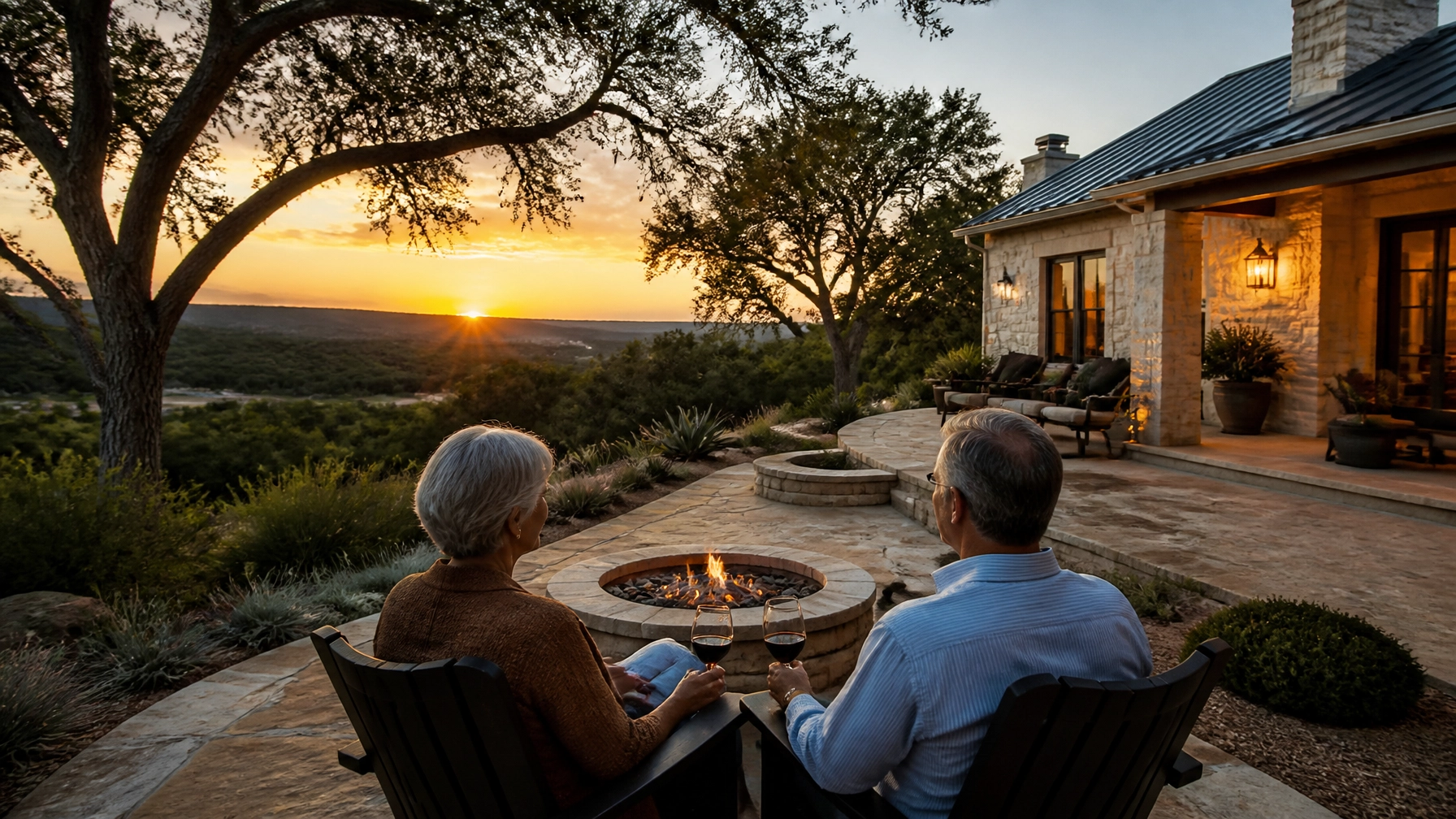
For many, the dream of the Texas Hill Country starts in the middle of a Tuesday afternoon meeting on the 40th floor of an Austin or Dallas high-rise. You look out the window, past the cranes and the congestion, and you start to crave something quieter. You imagine wide-open spaces, the smell of cedar after a rain, and a lifestyle that trades the elevator wait for a golf cart ride or a stroll through a vineyard.
Transitioning from a fast-paced urban environment to the "slower" pace of Hill Country life is exhilarating, but it’s more than just a change of scenery, it’s a complete lifestyle redesign. Whether you are eyeing a custom-built retreat in Fredericksburg or a luxury community in Boerne, the move requires a strategic approach to both your physical space and your financial future.
At Hill Country Retirement Guide, we’ve seen hundreds of families make this leap. To help you navigate the transition, we’ve compiled the ultimate checklist for moving from high-rise living to the ranch-life reality.
1. Define Your "Ranch-Life" (Community vs. Acreage)
The first step in your checklist isn't about boxes; it's about boundaries. In a high-rise, your "community" is vertical. In the Hill Country, it's horizontal, and the distance between neighbors matters.
- The "Lock-and-Leave" Luxury: If you plan on traveling or want resort-style amenities (think private golf courses and social clubs), a master-planned community like Cordillera Ranch or Boot Ranch might be your speed.
- The Private Homestead: If your dream includes a hobby vineyard, a workshop, or just total seclusion, you’ll be looking at larger acreage. Remember: more land means more maintenance. You’ll need to vet local "ranch hands" or landscaping services before you sign the deed.
- The Hybrid Approach: Many retirees choose "gated acreage" communities that offer the privacy of 5–10 acres with the security and infrastructure of a managed neighborhood.
2. The Architectural Pivot: Designing for the "Texas Lanai"
Moving from a condo to a Hill Country home usually means expanding your footprint, but specifically your outdoor footprint. In a high-rise, you might have a balcony. In the Hill Country, your patio becomes your primary living room.

- Prioritize the "Texas Lanai": When building or buying, look for deep, covered porches that offer shade during the July heat and protection from the occasional "blue norther."
- Single-Story Living: While multi-story homes offer great views, the most successful retirement transitions involve single-story layouts or "aging-in-place" features like wide hallways and zero-entry showers.
- The View Audit: In a high-rise, you pay for the skyline. In the Hill Country, you pay for the sunset. Ensure your home’s orientation maximizes the natural light without baking your interiors in the afternoon sun.
3. The Financial Transition: Liquidity & Wealth Preservation
This is where the transition gets technical. Moving from a primary residence in a major metro to a Hill Country estate often involves significant capital shifts. It isn't just about the purchase price; it’s about how that move fits into your overall retirement income strategy.
While Hill Country Retirement Guide provides the lifestyle roadmap, the team at Mau Sanchez Capital specializes in the heavy lifting of financial logistics for these high-value transitions.
"A move to the Hill Country is often the catalyst for a total portfolio re-evaluation. You’re moving from a high-growth urban career phase into a wealth preservation and distribution phase. Your assets need to reflect that new reality." , Mau Sanchez, Founder of Mau Sanchez Capital
- Property Tax Modeling: Texas has no state income tax, but property taxes can be high. However, once you hit 65, you can "freeze" certain school district taxes on your homestead. Ensure your financial advisor has modeled these costs into your long-term cash flow.
- Asset Allocation for the "New" Life: If you’ve sold a business or a high-value urban property to fund this move, you likely have a liquidity event that needs careful management. At Mau Sanchez Capital, we advocate for liquid, transparent, and publicly traded markets to ensure your retirement "ranch" doesn't become a "money pit" due to illiquid alternative investments.
- The "Luxury Buffer": Custom homes in the Hill Country often come with unique costs, well maintenance, septic systems, and specialized insurance for rural areas. Your portfolio should be constructed to handle these lumpy expenses without disrupting your lifestyle.

4. Rightsizing, Not Just Downsizing
Transitioning from a high-rise to a ranch-style home often involves more square footage, but a different kind of space. You may have fewer bedrooms but larger "gathering" spaces.
- The Guest Casita: Many Hill Country retirees find that once they move to a winery-adjacent town like Wimberley or Fredericksburg, their children and grandchildren visit much more often. A detached guest house (casita) is a top-tier checklist item for maintaining privacy while hosting.
- The Gear Transition: You’re trading your gym membership and valet parking for a garage that needs to hold a SUV, perhaps a golf cart, and maybe even a small tractor or UTV if you have acreage.
5. Integrating into the Hill Country Culture
The biggest mistake city-dwellers make is staying inside their "luxury bubble." The Hill Country thrives on community.
- Join the "Circuit": From the winery circuit in Fredericksburg to the Tuesday morning golf groups at Cordillera Ranch, getting involved early is key to a happy transition.
- Support Local: Whether it’s tax-efficient giving to local non-profits or shopping at the boutiques in downtown Boerne, becoming a "local" is a conscious choice.

Your Hill Country Transition Checklist: Summary
- Choose Your Tribe: Decide between a 55+ community, a master-planned country club, or private acreage.
- Vet the Infrastructure: Confirm water well/septic status, high-speed fiber internet availability (essential for modern retirement), and proximity to specialized healthcare.
- Model the Taxes: Work with a professional to understand the Texas homestead exemption and the "Over-65" tax freeze.
- Audit Your Liquidity: Ensure your investment portfolio is optimized for retirement income rather than just urban accumulation.
- Design for the Heat: Ensure your new home has a "Texas Lanai" and proper orientation for energy efficiency.
- Schedule a Fiduciary Review: Meet with an advisor who understands the unique financial landscape of Texas retirees.
The move from a high-rise to the hills is more than a change of zip code: it’s a change of heart. By planning your physical space and your financial foundation with the same level of care, you can ensure that your "ranch-life" is everything you imagined it would be.
Schedule a call with a fiduciary financial advisor today: https://calendly.com/portafoliocapital/15min
Portafolio Capital Management dba Mau Sanchez Capital is a Registered Investment Adviser. This content is for informational purposes only and does not constitute investment advice or a solicitation to buy or sell any security. Advisory services are provided only pursuant to a written advisory agreement. Learn more about Portafolio Capital Management at https://portafoliocapital.com/ or give us a call at (512) 593-8380.
Leave a Reply