
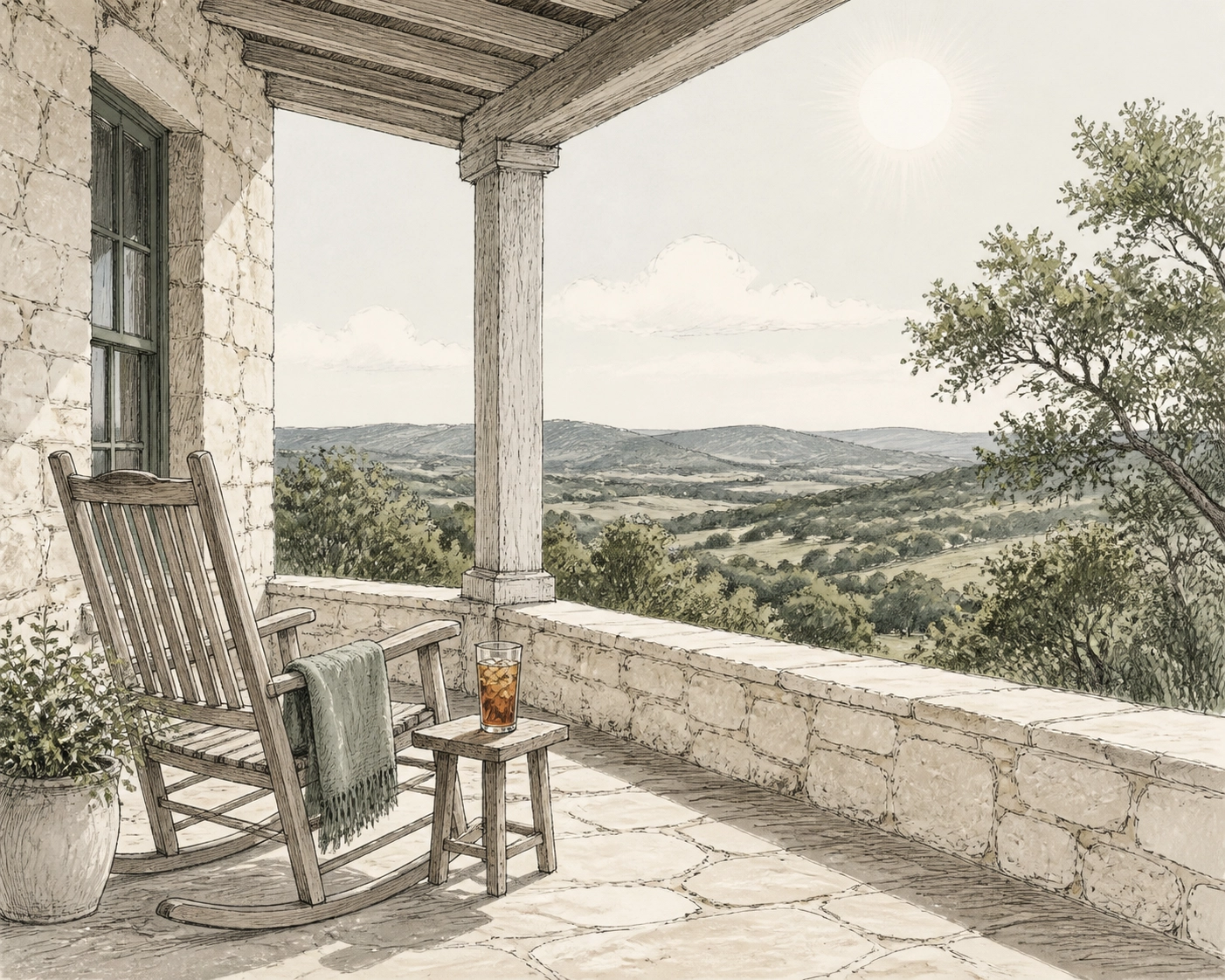
They say you don't truly "own" a home in the Texas Hill Country until you’ve survived your first August.
As a Texas native, I’ve seen my fair share of folks move to Boerne or Wimberley in the middle of a stunning, bluebonnet-filled April, only to look at me with wide-eyed terror come July. The heat here isn’t just a weather pattern; it’s a lifestyle. It’s a rhythmic, shimmering force that dictates when you eat, when you sleep, and, most importantly, how much you’re willing to pay your utility company.
If you’ve recently traded the city skyline for the rolling limestone hills, welcome. You’ve made a tax-efficient move and found a piece of paradise. But before you melt into the pavement, let me walk you through the hard-earned lessons of surviving a Hill Country summer without losing your cool (or your retirement savings).
The Rhythm of the Heat: The "10-to-6" Rule
In most parts of the country, "daytime" is when you get things done. In the Hill Country summer, daytime is a suggestion: and usually a bad one.
The most important survival tip I can give you is the "10-to-6" rule. Between 10:00 AM and 6:00 PM, the sun is the undisputed king of the outdoors. If you are retired and looking to stay active, your window for "outdoor living" happens at the bookends of the day.
I start my mornings at 6:30 AM. There is a specific, fleeting magic to a Hill Country sunrise when the air is still slightly crisp and the deer are still lingering in the yard. This is the time for your walk, your golf game, or your active lifestyle hobbies in Dripping Springs. By 10:30 AM, you should be retreating indoors like a tactical maneuver.
The afternoon? That’s for the "Siesta Mentality." It’s for reading, catching up on wealth preservation strategies, or exploring the air-conditioned art galleries of Fredericksburg.
The AC Bill: A Lesson in "Inflation-Proofing"
Your first summer electric bill is often the moment of "Texas realization." When the heat index hits 105°F for ten days straight, your HVAC system isn't just a luxury; it’s life support.
Many retirees coming from cooler climates are shocked by the cost of keeping a 3,000-square-foot Hill Country home at a comfortable 72 degrees. We often talk about inflation-proofing your Texas dream, and honestly, a significant part of that is planning for the seasonality of utility costs.
Native Tip: Get your AC serviced in April. Do not wait until June. Every HVAC technician in Comal and Kendall County will be booked solid the moment the first heatwave hits. Also, consider "energy vampires": those floor-to-ceiling windows that offer stunning views of the hills also act as giant magnifying glasses. High-quality solar shades are a retirement investment that pays for itself in lower monthly draws from your portfolio.

The Garden Struggle: Limestone vs. The Sun
If you moved here with dreams of a lush, English-style rose garden, I have some tough news. The Hill Country soil is essentially a thin layer of dust over solid limestone. Combined with the summer heat, it’s a graveyard for non-native plants.
Surviving the summer means embracing "Xeriscaping." Native plants like Texas Sage, Lantana, and Red Yucca don't just survive the 100-degree heat: they thrive in it. As someone who enjoys a lock-and-leave lifestyle, you’ll find that native landscaping requires far less water and attention, leaving you more time to enjoy the river.
The Pool Paradox: Cool Water is a Relative Term
Many retirees prioritize a home with a pool, and for good reason. It’s the ultimate centerpiece for outdoor living and entertaining. However, there is a "Pool Paradox" in Texas: when it’s 108°F outside, a shallow pool can quickly turn into a giant bathtub of lukewarm water.
To keep your pool refreshing:
- Evaporation is Real: You will lose inches of water a week to the Texas sun. Keep an eye on your levels to protect your pump.
- Chemicals Work Overtime: Sunlight eats chlorine. You’ll need to test your water more frequently in July and August than the rest of the year combined.
- The Night Swim: My favorite way to survive the summer is the 9:00 PM swim. The stars in the Hill Country are legendary, and the water feels much more restorative once the sun has finally dipped below the horizon.
Our Secret Lifeline: The Swimming Holes
While a backyard pool is great, the real Hill Country survival secret lies in our spring-fed rivers. These waters stay a constant, bracing 68 to 72 degrees year-round. When the air is 100°F, jumping into the Guadalupe or Frio River feels like a religious experience.
Places like the Blue Hole in Wimberley or Krause Springs in Spicewood are more than just tourist spots; they are the cooling centers of our culture. Just remember: these gems are popular. If you want to enjoy the "quiet corners," as we discussed in our Wimberley hidden gems guide, go on a Tuesday morning. One of the perks of retirement is that you don't have to fight the Saturday crowds.

Financial Planning for the "Summer Sabbatical"
It might seem strange to link a 100-degree day to your investment portfolio, but the reality is that retirement in the Hill Country requires a specific kind of liquidity and planning.
Whether it's the spike in utility bills, the cost of pool maintenance, or the common "summer sabbatical": where many Hill Country residents head north to Colorado or Montana for a month to escape the peak heat: your cash flow needs to be as resilient as a Texas Live Oak.
"A well-constructed portfolio should provide the freedom to enjoy the lifestyle you moved here for: whether that's a riverfront ranch or a month-long escape to cooler climates." : Mau Sanchez
At Mau Sanchez Capital, we focus on helping retirees design portfolios that prioritize liquidity, transparency, and cost efficiency. We believe in long-term equity ownership and proper asset allocation to ensure that when the Texas sun starts beating down, the only thing you have to worry about is whether you have enough ice in your tea.
Final Words of Wisdom
Surviving your first summer is a rite of passage. You’ll learn to love the sound of the cicadas (which always seem to get louder as the temperature rises) and you’ll find that a sunset over the hills is worth every penny of that July electric bill.
The Hill Country isn't just a place to live; it’s a place to thrive: provided you have a good hat, a deep swimming hole, and a solid financial plan.
Schedule a private meeting with a fiduciary financial advisor today by calling (512) 593-8380 or by visiting: https://calendly.com/portafoliocapital/15min
Portafolio Capital Management dba Mau Sanchez Capital is a Registered Investment Adviser. This content is for informational purposes only and does not constitute investment advice or a solicitation to buy or sell any security. Advisory services are provided only pursuant to a written advisory agreement.
This article may include stories, scenarios, and perspectives created or assisted by artificial intelligence. Although the individuals and circumstances described may be fictional, the topics are intended to reflect real financial, personal, and lifestyle issues that retirees and individuals commonly face. The content is provided to encourage readers to consider different perspectives that may affect their retirement, regardless of whether they are currently planning, approaching retirement, or already retired. It is intended for general educational and informational purposes only and should not be interpreted as personalized investment, financial, tax, legal, medical, or retirement-planning advice. Individual circumstances vary. Readers should independently verify any information presented and consult appropriately qualified professionals before making financial or personal decisions. No advisory, professional, or client relationship is created through the use of this website.
Leave a Reply