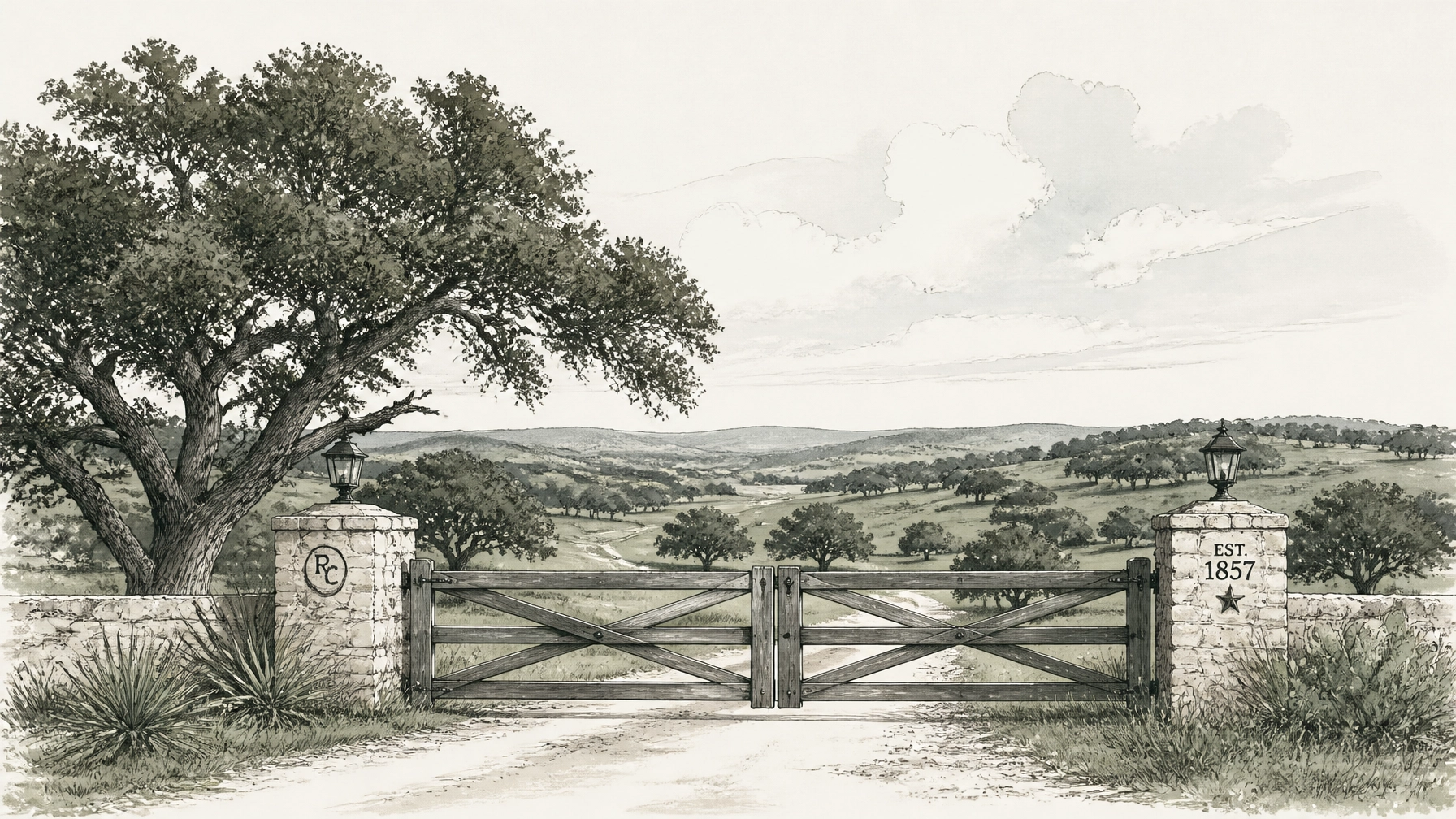
There is a specific kind of silence that settles over the Texas Hill Country just before sunset.
It’s a moment when the heat of the day retreats, the cicadas begin their rhythmic hum, and the shadows of the live oaks stretch long across the limestone soil.
I was sitting on the back porch of our property just outside of Wimberley, watching my grandson try to catch a perch in the creek, when it finally hit me: I wasn't just looking at a piece of real estate. I was looking at a legacy. But I was also looking at a potential burden.
For many of us who have spent our lives transitioning from high-rise careers to ranch life, the land is more than an asset. It is the backdrop of our family’s history. However, the transition of that land to the next generation is rarely as simple as signing a deed. It’s an emotional, logistical, and financial puzzle that requires more than just good intentions.
Here is the story of how my wife and I navigated the "hand-off," and the lessons we learned about preserving both the land and our family’s harmony.
The Realization: Stewardship vs. Ownership
We’ve owned our acreage for nearly thirty years. We’ve seen the cedar cleared, the grasses return, and the local deer population fluctuate. We always assumed our children would just "take it over" one day. But as we entered our late seventies, we realized that "one day" was getting closer, and we hadn't actually discussed what that looked like.
We started researching how other legendary Hill Country families handled this. Take the Giles family of Hillingdon Ranch near Comfort, for example. They have managed to keep their land intact for over 130 years through multiple generations. Their success wasn't an accident; it was the result of a shared family culture of stewardship.
As Vera Bowen, a steward of the Shield Ranch west of Austin, once said, "Stewardship is about caring for the land during our time to do so." That quote changed our perspective. We weren't just owners; we were temporary caretakers. Our job was to prepare the next caretakers for the reality of the task.

The Kitchen Table Conversation
The hardest part wasn't the paperwork; it was the conversation. We invited our three adult children out for a long weekend. We didn't start with talk of "inheritance" or "taxes." We started with the land itself.
We asked them a simple question: “What does this place mean to you?”
The answers surprised us. Our eldest daughter, who lives in Dallas, loved the idea of the ranch as a retreat but admitted she had no interest in the day-to-day management. Our son, who stayed closer to the Hill Country, was deeply invested in the conservation of the creek. Our youngest just wanted to make sure the family still had a place to gather for Thanksgiving.
This conversation was vital. Too often, families assume everyone wants an equal slice of the pie, but in the Hill Country, slicing the pie often means fragmenting the land, which can destroy its ecological and agricultural value.
Planning for Liquidity
One of the biggest hurdles in passing down land is "land rich, cash poor" syndrome. If the land is the primary asset, heirs are often forced to sell portions of it just to pay for the upkeep or to buy out a sibling who wants their share in cash.
This is where our financial strategy became the bridge. Working with a professional team, we focused on building a robust, liquid portfolio outside of the real estate. By prioritizing wealth preservation through publicly traded markets: stocks and traditional fixed income: we ensured that there would be enough liquidity to support the land’s needs.
The goal was simple: we didn't want our children to be forced into a "fire sale" because they couldn't afford the property taxes or the maintenance. Proper asset allocation in our retirement accounts provided the financial cushion that made keeping the land a choice, not a struggle.

The Role of Conservation
For us, the idea of our hills being subdivided into 2-acre "cookie-cutter" lots was heartbreaking. We began looking into conservation easements, a tool used by many Hill Country families to ensure their land stays rural forever.
A conservation easement is a voluntary legal agreement that limits certain types of development on the property. It stays with the land, meaning even after we pass the torch, the next generation (and the one after that) is bound by the commitment to keep the land open and wild. It’s a powerful way to cement a legacy of stewardship, though it’s a decision that must be made with the full consensus of the heirs.
Navigating the Professional Side
While our hearts were in the hills, our heads had to be in the spreadsheets. We weren't looking for estate planning advice from a blog: we knew we needed a team of professionals who understood the unique nuances of Texas land.
We spent time in a professional, relaxed environment: much like the offices at Mau Sanchez Capital: discussing how our investment management tied into our long-term legacy goals. We focused on:
- Transparency and Liquidity: Ensuring our non-real estate assets were in cost-efficient, publicly traded markets.
- Fiduciary Guidance: Having an advisor who put our family’s specific goals first, rather than pushing complex or opaque alternative investments.
- Risk Management: Constructing a portfolio that could withstand market volatility so the "ranch fund" remained stable.

Finding Peace in the Transition
The "hand-off" isn't a single event; it’s a process. Today, our children are more involved than ever. They participate in the management decisions, they understand the financial structure that supports the property, and most importantly, they share the same land ethic.
Passing the torch has given my wife and me a sense of peace we didn't expect. We still sit on that back porch, and we still watch the sunsets. But now, when I look at my grandson by the creek, I’m not worried about the future. I know the plan is in place. I know the resources are there. And I know the land will be here, just as it is, for him to one day sit on this same porch and watch his own grandchildren.
The Hill Country isn't just where we live. It’s who we are. And ensuring it stays that way for the next generation is the most important "investment" we’ve ever made.

Are you ready to plan your Hill Country legacy?
Building a financial foundation that supports your lifestyle and your long-term family goals requires a clear, fiduciary approach. Whether you are navigating the transition of a family ranch or simply seeking to preserve your wealth in retirement, Mau Sanchez Capital can help you design a portfolio built for the long term.
Learn more about Portafolio Capital Management dba Mau Sanchez Capital at https://portafoliocapital.com/ or give us a call at (512) 593-8380.
Schedule a private meeting with a fiduciary financial advisor today by calling (512) 593-8380 or by visiting: https://calendly.com/portafoliocapital/15min
Portafolio Capital Management dba Mau Sanchez Capital is a Registered Investment Adviser. This content is for informational purposes only and does not constitute investment advice or a solicitation to buy or sell any security. Advisory services are provided only pursuant to a written advisory agreement.
This article may include stories, scenarios, and perspectives created or assisted by artificial intelligence. Although the individuals and circumstances described may be fictional, the topics are intended to reflect real financial, personal, and lifestyle issues that retirees and individuals commonly face. The content is provided to encourage readers to consider different perspectives that may affect their retirement, regardless of whether they are currently planning, approaching retirement, or already retired. It is intended for general educational and informational purposes only and should not be interpreted as personalized investment, financial, tax, legal, medical, or retirement-planning advice. Individual circumstances vary. Readers should independently verify any information presented and consult appropriately qualified professionals before making financial or personal decisions. No advisory, professional, or client relationship is created through the use of this website.
Leave a Reply