When we first packed our bags for the Texas Hill Country, we had a very specific image of what "retirement" looked like. We imagined ourselves on the back patio of a prestigious clubhouse, a chilled glass of Chablis in hand, overlooking a manicured 18th green. We thought that to truly "arrive" in Boerne or Fredericksburg, you needed the gold-stamped membership card and the reserved locker.
For the first six months, we did exactly that. We signed the papers, paid the five-figure initiation fee, and settled into the rhythm of tee times and Saturday night galas. It was pleasant. It was polished. But something felt… missing.
As we began to explore the backroads: the places where the Texas Hill Country retirement lifestyle really breathes: we realized we were spending our days in a gated bubble that looked exactly like the one we had left in the city. We hadn’t moved to the hills to be surrounded by the same walls; we moved here to be part of the land.
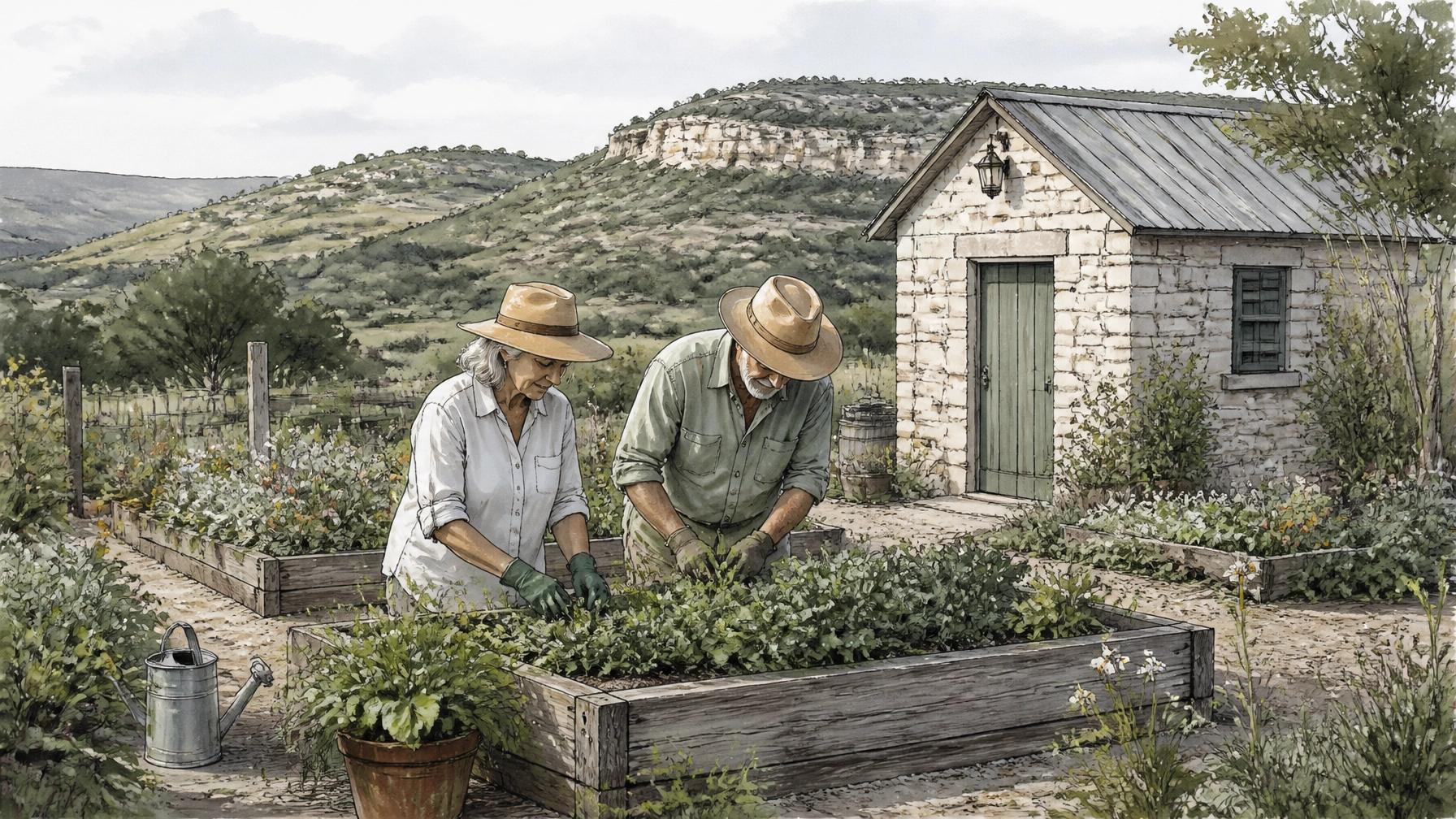
Last spring, we made a radical choice. We ditched the country club membership and joined a local food co-op and community garden. Here is why it was the best decision we’ve made since moving to Texas.
The Disconnect of the "Amenity" Life
The problem with many luxury country clubs isn't the amenities; it's the social architecture. Everything is designed for consumption. You consume the golf course, you consume the dining room service, and you consume the pre-planned social events.
In a country club, your social circle is often filtered by the same income bracket and the same life stage. While that offers a sense of security, it can also feel static. We found that building a community when your nearest neighbor is a mile away requires more than just a shared membership fee; it requires shared purpose.
One afternoon, while driving past a small historic plot near downtown Boerne, I saw a group of people: some in their 20s, some with gray hair like mine: laughing while they hauled mulch and pulled carrots. They weren't "members" of anything exclusive. They were owners of a co-op.

The Social Payoff: From Networking to Neighbors
Joining the co-op felt like an initiation into the real Hill Country. In a community garden, the social barriers dissolve. When you are both trying to figure out why the squash bugs are winning this year, it doesn't matter if you were a CEO or a schoolteacher.
The social benefits were immediate:
- Intergenerational Connection: We met young families who were teaching us about heirloom tomatoes, and in return, we shared stories of our own transitions to ranch-style living.
- Shared Purpose: There is a profound sense of satisfaction in growing food that actually ends up on a neighbor's table or at a local food bank. It provided a sense of "work" without the stress of a career.
- Authentic Living: We traded the polo shirts for work boots. Instead of "networking," we were actually neighboring.
According to research on community gardens and social capital, these spaces act as a catalyst for neighborhood development. They provide frequent, low-pressure contact that is essential for preventing the isolation that can sometimes creep into a quiet retirement.
The Financial "Found Money"
Let’s talk about the math. A high-end Hill Country country club can easily run you $25,000 to $50,000 in initiation fees, plus $800 to $1,500 in monthly dues, not including "minimum" food and beverage spends. Over a decade, that is a significant portion of a retirement portfolio.
By switching to a community garden and a local food co-op, we slashed our discretionary "entertainment" and "grocery" budgets by nearly 60%. But the real value wasn't just in the savings: it was in what we did with that capital.
When we stopped paying for a lifestyle we weren't fully utilizing, we were able to reinvest that money back into our core investment strategy. This is where inflation-proofing your Texas dream becomes tangible. Instead of that money disappearing into club maintenance fees, it remained in liquid, transparent markets where it could continue to work for our long-term legacy.
Investing with the Same Philosophy
The decision to choose a co-op over a country club actually mirrored our financial philosophy. In our professional lives, and in working with fiduciaries like Mau Sanchez, we learned that complexity and high fees rarely lead to better outcomes.
Just as we preferred the transparency of the garden: knowing exactly where our food came from and who grew it: we prefer a retirement portfolio that is built on:
- Publicly Traded Markets: No opaque structures or "members-only" lockups.
- Liquidity: The ability to access our capital if we decide to travel or buy that extra acre next door.
- Cost Efficiency: Minimizing unnecessary fees so that more of our wealth stays in our family’s hands.

A Slower, Richer Pace
There is a unique peace that comes with the Hill Country sunset when you've spent the afternoon with your hands in the soil. It’s a feeling of being rooted. We still enjoy a great steak at a local restaurant and a bottle of Fredericksburg wine, but we no longer feel the need to pay for a "status" to enjoy the lifestyle.
Retirement shouldn't be about adding more layers of exclusivity; it should be about peeling those layers back to find what truly makes you happy. For us, it wasn't the country club gala. It was the Saturday morning co-op pickup, the shared harvest, and the quiet knowledge that our financial house was as sustainable and well-tended as our garden.

If you are currently evaluating your move to the Hill Country, or if you’ve been here a while and feel like you’re paying for a lifestyle that doesn’t quite fit, it might be time to rethink the "traditional" path. Whether it's your social life or your investment portfolio, the best results often come from simplicity, transparency, and a connection to what’s real.
Schedule a private meeting with a fiduciary financial advisor today by calling (512) 593-8380 or by visiting: https://calendly.com/portafoliocapital/15min
Portafolio Capital Management dba Mau Sanchez Capital is a Registered Investment Adviser. This content is for informational purposes only and does not constitute investment advice or a solicitation to buy or sell any security. Advisory services are provided only pursuant to a written advisory agreement.
This article may include stories, scenarios, and perspectives created or assisted by artificial intelligence. Although the individuals and circumstances described may be fictional, the topics are intended to reflect real financial, personal, and lifestyle issues that retirees and individuals commonly face. The content is provided to encourage readers to consider different perspectives that may affect their retirement, regardless of whether they are currently planning, approaching retirement, or already retired. It is intended for general educational and informational purposes only and should not be interpreted as personalized investment, financial, tax, legal, medical, or retirement-planning advice. Individual circumstances vary. Readers should independently verify any information presented and consult appropriately qualified professionals before making financial or personal decisions. No advisory, professional, or client relationship is created through the use of this website.
Leave a Reply