For years, my wife and I were the ultimate Austin cheerleaders. We loved the energy of South Congress, the morning walks around Lady Bird Lake, and the sheer convenience of having world-class brisket just ten minutes from our front door. As we approached our mid-60s, we assumed we’d simply "downsize" into a modern condo in West Lake or a lock-and-leave in Tarrytown.
But something changed.
The "cool factor" that defines Austin started to feel like a hurdle rather than an asset. The twenty-minute drive to see friends began taking forty-five. The quiet patio dinner was often drowned out by the hum of a nearby construction crane. We realized that while Austin is a fantastic place to build a career, we weren't sure it was the place where we wanted to enjoy the results of one.
After a long weekend exploring the historic backroads of Kendall County, we made the call. We chose Boerne. Here is why we made the move and why we haven’t looked back since.
The Commute Reality: Trading MoPac for the Main Street Mile
In Austin, traffic isn't just a conversation starter; it's a lifestyle constraint. According to the Texas A&M Transportation Institute, Austin consistently ranks among the most congested cities in the nation. For us, retirement was supposed to be about freedom, not checking Google Maps before deciding to grab a gallon of milk.

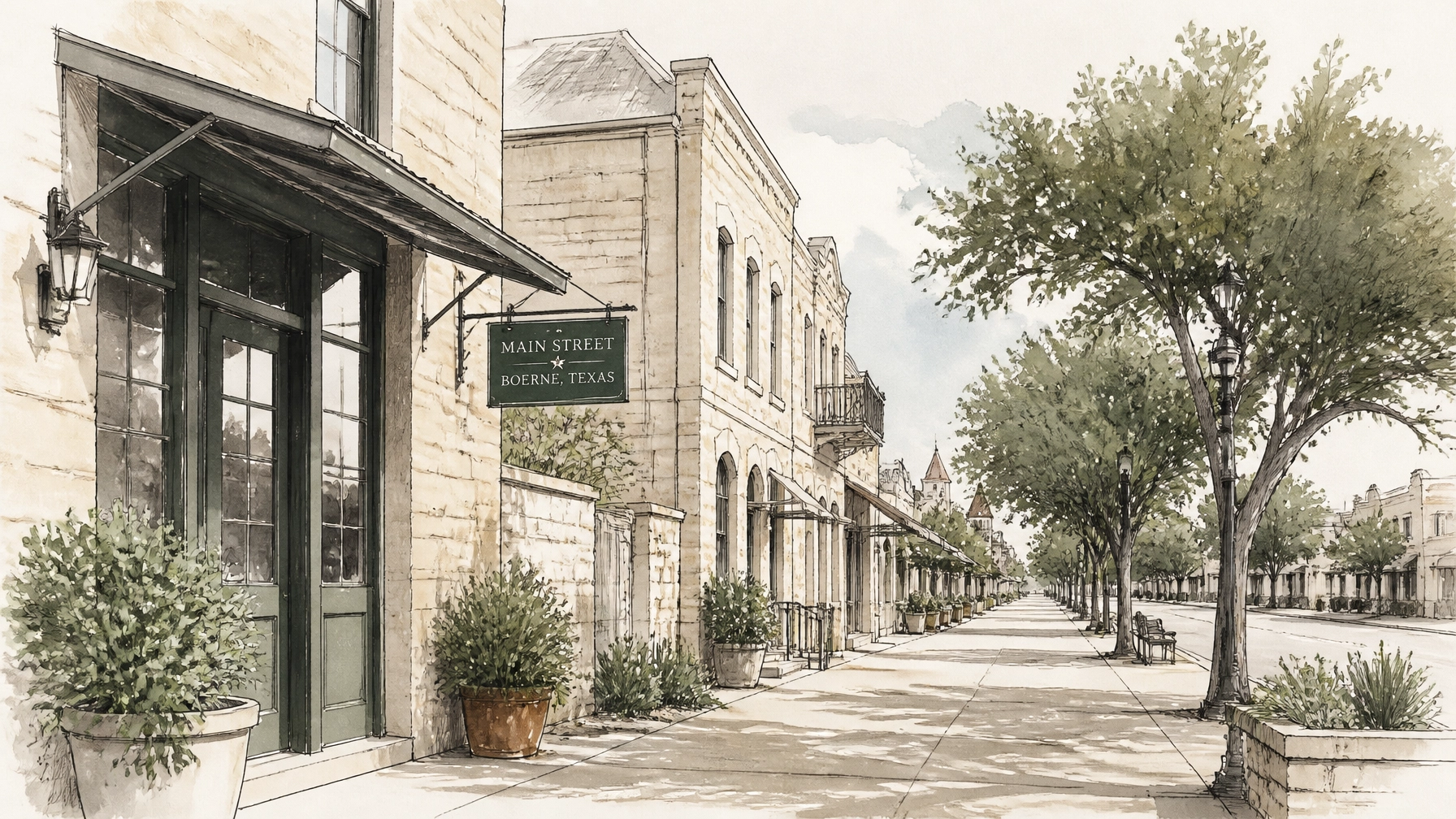
Moving to Boerne felt like exhaling a breath we had been holding for a decade. While Boerne has grown: now home to roughly 22,000 residents: the scale is entirely different. Our "commute" now consists of a five-minute drive to the Hill Country Mile to visit our favorite bakery or a leisurely stroll through the Cibolo Nature Center.
When we do need the "big city" amenities, San Antonio’s medical centers and international airport are only 30 minutes south. We found that we actually have better access to specialized healthcare and travel hubs from Boerne than we did when we were fighting cross-town traffic in Austin.
The Cost of Living (and the Value of Space)
There is no sugarcoating it: the Texas Hill Country is a premium market. However, when comparing luxury acreage in Boerne versus Austin, the math usually leans in favor of Kendall County.
In Austin, the price per square foot often reflects the proximity to tech hubs and nightlife. In Boerne, that same investment often buys you something far more valuable in retirement: privacy and a view.
We were able to transition from a cramped city lot to a three-acre property with a view of the rolling hills. This shift from "high-rise to ranch life" required a bit of a relocation checklist, but the psychological impact of seeing more trees than neighbors cannot be overstated.
A Community That Knows Your Name
Austin is vibrant and diverse, but it can also feel anonymous. In a city of nearly a million people, it’s easy to feel like just another face in the crowd. Boerne, by contrast, retains a "small-town" soul that is increasingly rare.

Within our first month, we knew our neighbors. We recognized the shop owners on Main Street. There is a sense of civic pride here: from the Dickens on Main festival in the winter to the local farmers' markets: that makes you feel like a stakeholder in the community rather than just a resident. For many of our friends who moved here, this social connectivity is the most significant factor in their retirement wellness.
Financial Peace: Aligning the Lifestyle with the Portfolio
One of the biggest hurdles in moving from a major metro to a scenic retirement hub is the "financial transition." Moving to the Hill Country often involves managing a significant influx of capital from a home sale, while simultaneously planning for a decades-long retirement income stream.
This is where the transition becomes about more than just real estate; it’s about wealth preservation.
In our discussions with the team at Mau Sanchez Capital, we learned that the key to a peaceful Hill Country retirement isn't just about how much you saved: it's about how that capital is structured. We favored a philosophy built on:
- Liquidity: Ensuring we have access to cash without waiting on a complex real estate syndication to sell.
- Public Markets: Utilizing transparent, publicly traded stocks and bonds that allow for flexibility as our needs change.
- Risk Management: Constructing a portfolio that accounts for the specific cost-of-living nuances in our new hometown.
As one local advisor often says: "You didn't move to the Hill Country to spend your afternoons worrying about market volatility or hidden fees."

The Verdict: No Regrets
Leaving Austin wasn't about "getting old"; it was about getting intentional. We traded the "Keep Austin Weird" bumper stickers for "Boerne: Greatness on the Hill." We traded the noise of the city for the sound of the wind through the cypress trees at the park.
If you are currently sitting in Austin traffic, wondering if there is a slower, more deliberate way to spend your next thirty years, I can tell you from experience: the view from Boerne is much better.
Frequently Asked Questions
Is Boerne more expensive than Austin?
Generally, housing in Boerne is more affordable than in prime Austin neighborhoods (like West Lake or Tarrytown) on a price-per-square-foot basis. However, Boerne is a premium market within the Hill Country, and newer master-planned communities may have higher property tax rates due to MUD/PID assessments.
How far is the drive from Boerne to San Antonio?
Depending on your destination, the drive is typically 30 to 45 minutes. The San Antonio Medical Center and the International Airport are easily accessible via I-10, making Boerne a popular choice for those who want small-town living with big-city access.
What is the best time of year to visit Boerne for a trial run?
Spring (March-April) offers the best wildflowers, while the fall (October-November) provides excellent weather for exploring the Hill Country Mile and local parks like Cibolo Nature Center.
Schedule a private meeting with a fiduciary financial advisor today by calling (512) 593-8380 or by visiting: https://calendly.com/portafoliocapital/15min
Portafolio Capital Management dba Mau Sanchez Capital is a Registered Investment Adviser. This content is for informational purposes only and does not constitute investment advice or a solicitation to buy or sell any security. Advisory services are provided only pursuant to a written advisory agreement.
This article may include stories, scenarios, and perspectives created or assisted by artificial intelligence. Although the individuals and circumstances described may be fictional, the topics are intended to reflect real financial, personal, and lifestyle issues that retirees and individuals commonly face. The content is provided to encourage readers to consider different perspectives that may affect their retirement, regardless of whether they are currently planning, approaching retirement, or already retired. It is intended for general educational and informational purposes only and should not be interpreted as personalized investment, financial, tax, legal, medical, or retirement-planning advice. Individual circumstances vary. Readers should independently verify any information presented and consult appropriately qualified professionals before making financial or personal decisions. No advisory, professional, or client relationship is created through the use of this website.
Leave a Reply