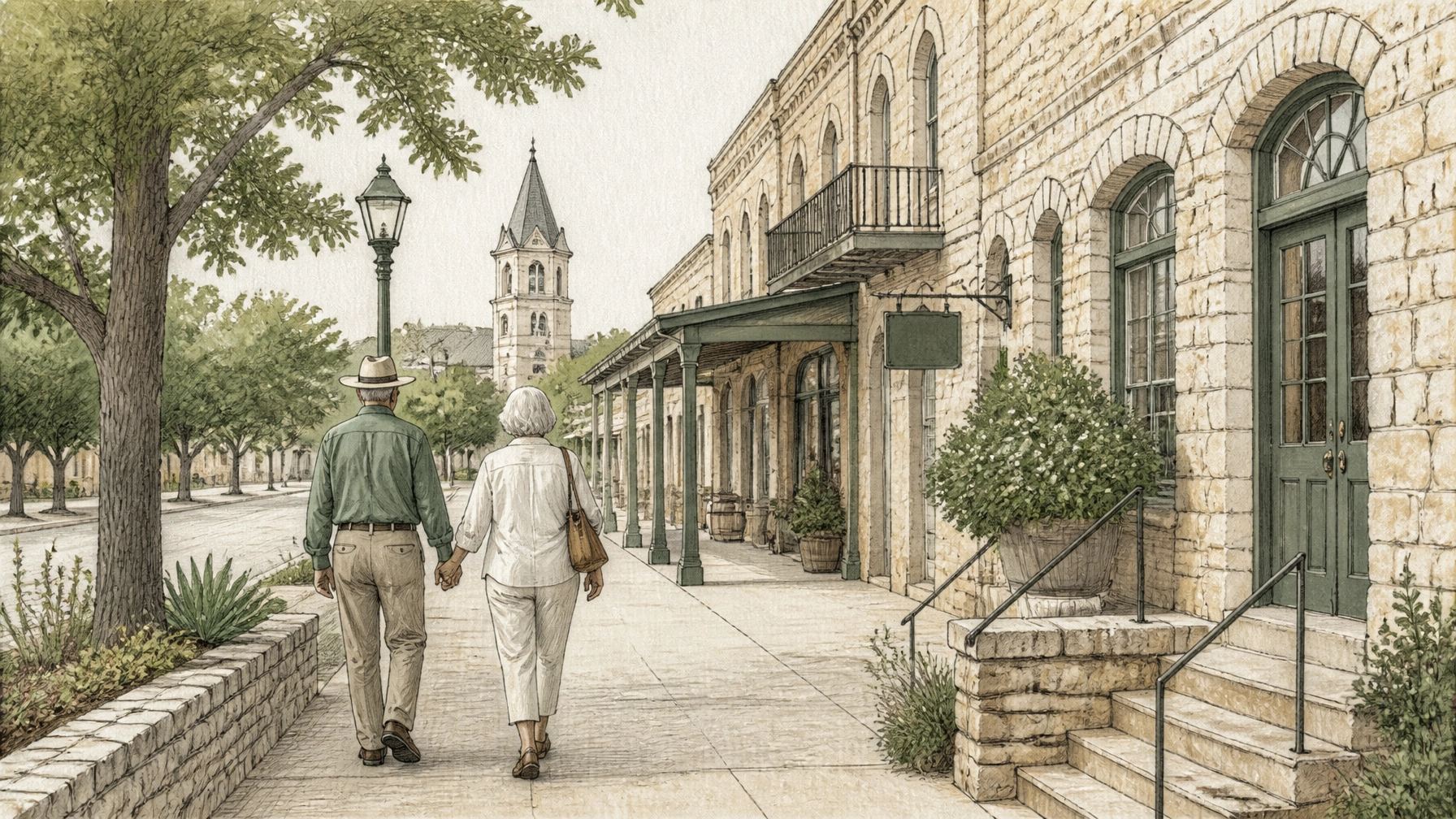
When my wife and I first pulled our SUV onto Main Street with a "Sold" sign in the rearview mirror, I thought I knew exactly what Fredericksburg was. I’d visited for the peaches in the summer and the wine in the fall for twenty years. I figured living here would be like a perpetual vacation: a never-ending cycle of Riesling, German heritage, and sunsets over the limestone hills.
But as any local will tell you, visiting a place and living in it are two entirely different animals. My first 365 days as a full-time resident of the Texas Hill Country were a masterclass in adaptation. I expected the peace; I didn’t expect the pace. I expected the scenery; I didn’t expect the depth of the community roots.
As I look back on that first year, five specific surprises stand out: the kind of things you won’t find in a tourism brochure, but that fundamentally changed how we view our retirement.
1. The "Tuesday vs. Saturday" Paradox
The biggest shock wasn’t the number of tourists: it was how much they didn't affect my life once I learned the rhythm. Fredericksburg is a global destination, hosting over 400 events annually, from Oktoberfest to the Gillespie County Fair. On a Saturday in October, Main Street is a vibrant, bustling hive of activity.
Early on, I found this overwhelming. I worried that my "peaceful retirement" was actually a front-row seat to a perpetual festival. But then, I discovered Tuesday.
In Fredericksburg, the locals "own" the weekdays. On a Tuesday afternoon, you can walk into almost any bakery or shop and have a twenty-minute conversation with the owner. The pace slows to a crawl. You learn which backroads to take to avoid the weekend traffic on Highway 290, and you realize that the tourism energy actually provides the town with amenities: like high-end dining and boutiques: that a town of 11,000 people normally couldn't support. It’s a trade-off that, after twelve months, I’ve come to love.
2. The Wine Scene is a Social Connector, Not Just a Drink
Before moving here, I’d read about the wine country retirement lifestyle. I imagined we’d visit a tasting room once a month. What I didn't realize is that the wineries are the primary social hubs for retirees in the area.

Within three months, we had joined two wine clubs. It wasn't because we needed more bottles in our cellar; it was because the "pick-up parties" and member-only events are where we met our best friends. In the city, you meet people through work or the gym. Here, you meet them over a glass of Tempranillo.
There is a deep sense of agriculture and craft here. You aren't just drinking wine; you’re talking to the people who grew the grapes. This connection to the land provides a groundedness that I found missing in the suburban sprawl we left behind. It’s a sophisticated way of living that feels surprisingly unpretentious.
3. The "Art Colony" Legacy is Alive and Well
I knew Fredericksburg had galleries, but I assumed they were mostly for visitors looking for a souvenir. I was wrong. The town has a rich history as an art colony, and that creative spirit is infectious.

By my sixth month, I found myself signing up for a watercolor workshop at a local studio. I hadn't picked up a brush since high school. To my surprise, half the class were other retirees who had moved here with the same intent: to finally do the things they never had time for during their working years.
The art scene here isn't just about looking at paintings; it's about participation. Whether it’s community theater, live music at Luckenbach, or pottery classes, there is a cultural weight to this town that keeps your mind engaged. It’s one of the hidden gems of the Hill Country, providing a sense of purpose that is vital in the first year of retirement.
4. Building a Social Circle Requires "Joining"
In a small town, you can’t be a wallflower. I expected people to knock on my door with peach cobbler (which did happen once), but I quickly learned that the most fulfilling social lives are built through active participation.
Fredericksburg has an incredible network of volunteer organizations and clubs. From the Golden Hub Community Center to the native plant society, the options are endless. I learned that "Hill Country hospitality" is a two-way street. Once you show up and lend a hand: whether it’s helping with a historic preservation project or volunteering at a festival: you are no longer a "newcomer." You are a neighbor.
This sense of belonging is something we had to work for, but it has been the most rewarding part of the move. For those moving from large metros, the social life in the sticks can feel daunting at first, but the rewards of a close-knit community are incomparable.
5. The Logistics of "Destination Living"
The final surprise was the practical side of aging in a scenic location. While Fredericksburg has a solid local hospital, I quickly realized that for specialized medical care, we’d be making the 75-minute drive to San Antonio or Austin.
This realization changed how I looked at our wealth preservation strategies. Retirement in the Hill Country isn't just about the home you buy; it's about the infrastructure you need to maintain your lifestyle long-term. We had to account for more travel, different service costs, and the logistics of living in a town that is beautiful but occasionally remote.
It reinforced the importance of having a clear, liquid, and transparent financial plan. When you aren't worrying about the markets or the "what-ifs" of your portfolio, you can focus on the "now": like which trail to hike at Enchanted Rock or which vintage is peaking this season.

Finding Your Peace of Mind
My first year in Fredericksburg taught me that a successful retirement is a balance of lifestyle and logic. You need the art, the wine, and the community to feed your soul, but you need a sound financial foundation to ensure those things last for the next thirty years.
Moving here was the best decision we ever made, but it required a shift in perspective. We stopped looking at our retirement as a static destination and started viewing it as an active, evolving journey.
If you are considering making the move to Fredericksburg or any of our beautiful Hill Country communities, don't just plan for the move: plan for the life that follows. Managing a portfolio that supports this lifestyle requires a focus on long-term equity ownership, proper asset allocation, and cost efficiency.
At Mau Sanchez Capital, we help families navigate these transitions by focusing on transparent, liquid, and fiduciary-led investment management. Whether you’re comparing luxury acreage in Boerne or planning your Fredericksburg legacy, we are here to provide the guidance you need.
Schedule a private meeting with a fiduciary financial advisor today by calling (512) 593-8380 or by visiting: https://calendly.com/portafoliocapital/15min
Portafolio Capital Management dba Mau Sanchez Capital is a Registered Investment Adviser. This content is for informational purposes only and does not constitute investment advice or a solicitation to buy or sell any security. Advisory services are provided only pursuant to a written advisory agreement.
This article may include stories, scenarios, and perspectives created or assisted by artificial intelligence. Although the individuals and circumstances described may be fictional, the topics are intended to reflect real financial, personal, and lifestyle issues that retirees and individuals commonly face. The content is provided to encourage readers to consider different perspectives that may affect their retirement, regardless of whether they are currently planning, approaching retirement, or already retired. It is intended for general educational and informational purposes only and should not be interpreted as personalized investment, financial, tax, legal, medical, or retirement-planning advice. Individual circumstances vary. Readers should independently verify any information presented and consult appropriately qualified professionals before making financial or personal decisions. No advisory, professional, or client relationship is created through the use of this website.
Leave a Reply