
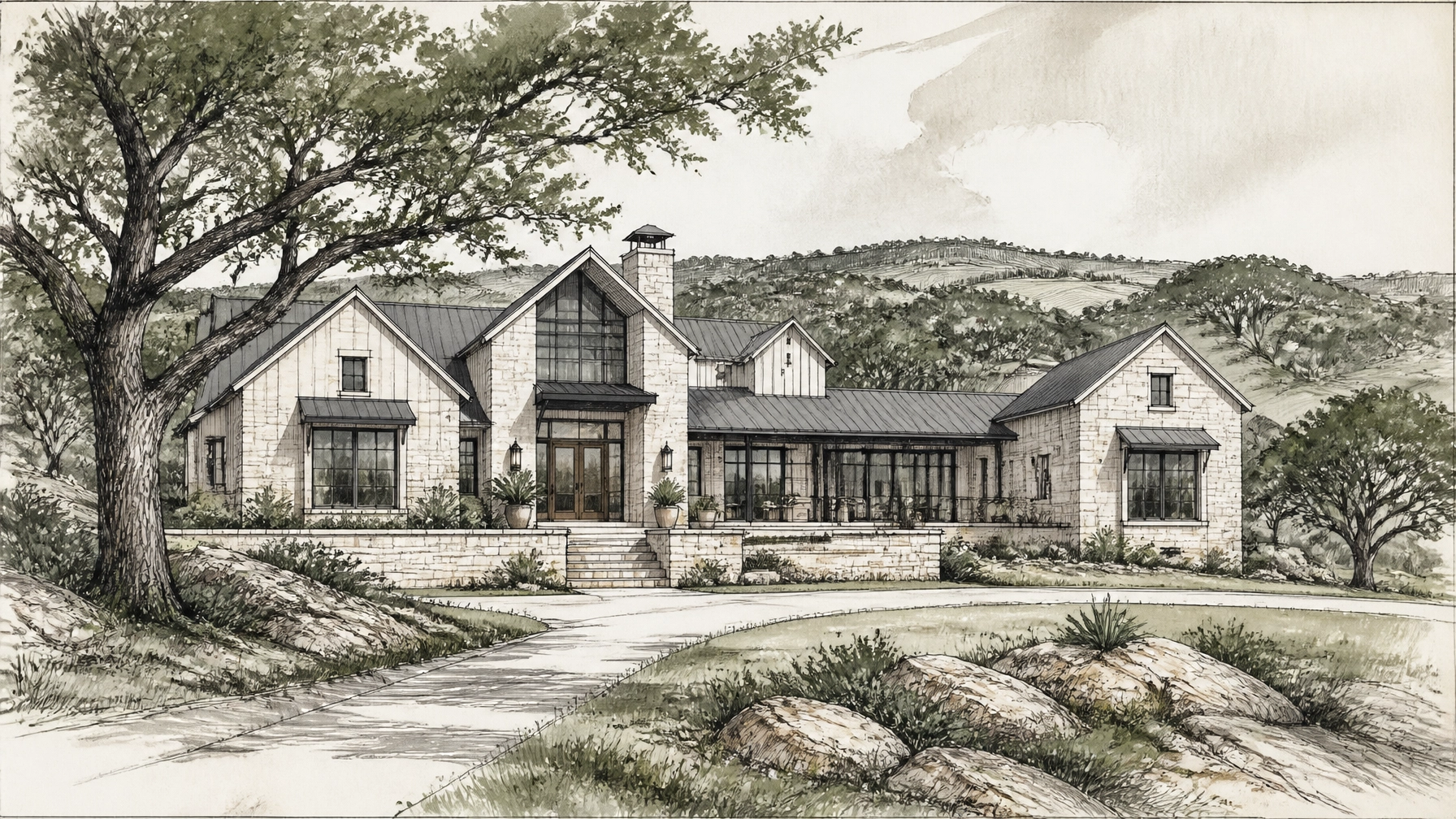
When Sarah and I first stood on our five-acre lot just outside of Boerne, we didn’t see the challenges. We saw the sunset. We saw the way the light hit the ancient live oaks and how the breeze moved through the high grass. We saw our retirement.
We had spent thirty years in the corporate grind, dreaming of the day we’d trade the concrete of Dallas for the limestone of the Texas Hill Country. We weren't just buying land; we were buying a legacy. But as we soon learned, building a custom home on this rugged, beautiful terrain isn’t like a suburban build. It’s an endurance sport, a financial puzzle, and a test of marriage, all wrapped in a modern farmhouse aesthetic.
If I could go back and talk to that couple standing on the hill that first day, I’d tell them three things: the rock is harder than you think, the timeline is longer than you’ve been told, and your budget needs a "Hill Country Tax" built into it from day one.
The Limestone Tax: Why the Ground Matters
The first thing that "almost broke us" was the very thing we loved most: the land. In the Hill Country, you don't just dig a foundation; you negotiate with the earth.
We had budgeted for site prep based on what we’d heard from friends who built in North Texas. That was our first mistake. Our lot looked "gentle" to the naked eye, but two feet under the soil sat a solid shelf of Edwards Limestone.

Our builder called us three weeks into excavation. "We’ve hit a ledge," he said. That "ledge" required a rock saw and a specialized milling crew that cost between $180 and $425 per hour. What we thought would be a $20,000 site prep bill ballooned to nearly $65,000 before the first bag of concrete was even poured.
When you are inflation-proofing your Texas dream, you have to account for these environmental variables. In our case, the terrain didn't just change the budget; it changed the house's orientation to avoid more blasting, which meant redrawing half the site plan.
The Architect-Builder Dance
One of the smartest decisions we made, though it felt like an indulgence at the time, was hiring an architect before we even finalized our builder.
Many people try to save money by using "off-the-shelf" plans and asking a builder to modify them. In the Hill Country, that’s a recipe for disaster. Because of the slopes and the rock, every house here needs to be site-specific. Our architect spent hours walking the property, tracking the sun’s path, and measuring the grade of the hill.

"A house in the Hill Country shouldn't sit on the land; it should grow out of it." , Our Architect
Having an architect-led design process allowed us to integrate the builder early for "value engineering." While the architect dreamt of cantilevered decks, the builder was there to tell us exactly how much steel that would cost. That tension between vision and reality is what kept us from going completely off the financial rails.
If you’re currently weighing the luxury acreage audit, remember that the "soft costs", architects, surveys, and structural engineers, often represent 10–15% of your total project cost before you even break ground.
The Timeline Trap: 18 Months vs. Reality
We were told to expect an 18-month build. We moved in at month 26.
In a booming market like Central Texas, labor is the ultimate bottleneck. We had a six-week delay because the local septic contractor was backed up, and another three-month delay waiting for custom windows that were stuck in a supply chain limbo.
During those extra eight months, we were paying for a rental house, storage units, and a construction loan that was accruing interest daily. This is where the emotional fatigue sets in. You start to second-guess every choice. Do we really need the outdoor living 2.0 setup? Should we have just bought an existing home in New Braunfels?
Managing the Wealth Preservation Aspect
Building a custom home in retirement isn't just an emotional journey; it's a massive capital allocation decision. We had to be very careful not to let "finish-out fever" deplete the liquid assets we needed for our retirement income.
When the builder asked if we wanted to upgrade to the premium limestone facade or the hand-scraped white oak floors, we didn't just look at our bank account, we looked at our long-term plan. We needed to ensure that while we were building our "forever home," we weren't compromising the wealth preservation strategies we had spent decades building.

We worked closely with our financial team to structure the construction draws and ensure our portfolio stayed balanced despite the rising costs of materials. Having a fiduciary perspective helped us say "no" to certain upgrades that didn't add long-term value, keeping our focus on liquid, transparent markets rather than sinking every last dime into "dead" equity in the walls.
Was It Worth It?
Last night, we sat on our finished "Texas Lanai," watching the stars come out over the valley. The $45,000 rock milling bill felt like a lifetime ago. The 26-month wait was a distant memory.
We have a home that is perfectly oriented to catch the southeast breeze. We have a kitchen designed for our grandkids to bake cookies in. We have a space that reflects exactly who we are at this stage of our lives.

Building in the Hill Country is difficult, expensive, and often frustrating. But if you go into it with your eyes open: and your finances properly structured: it is the most rewarding project you will ever take on.
Schedule a private meeting with a fiduciary financial advisor today by calling (512) 593-8380 or by visiting: https://calendly.com/portafoliocapital/15min
Portafolio Capital Management dba Mau Sanchez Capital is a Registered Investment Adviser. This content is for informational purposes only and does not constitute investment advice or a solicitation to buy or sell any security. Advisory services are provided only pursuant to a written advisory agreement.
This article may include stories, scenarios, and perspectives created or assisted by artificial intelligence. Although the individuals and circumstances described may be fictional, the topics are intended to reflect real financial, personal, and lifestyle issues that retirees and individuals commonly face. The content is provided to encourage readers to consider different perspectives that may affect their retirement, regardless of whether they are currently planning, approaching retirement, or already retired. It is intended for general educational and informational purposes only and should not be interpreted as personalized investment, financial, tax, legal, medical, or retirement-planning advice. Individual circumstances vary. Readers should independently verify any information presented and consult appropriately qualified professionals before making financial or personal decisions. No advisory, professional, or client relationship is created through the use of this website.
Leave a Reply